A note from our WTCSD Director: Japan trade mission reflections

San Diego to Japan 2026

Dear EDC investors and partners,

In March, I wrote that San Diego needed to play offense in an uncertain global economy. We committed to leading with data, deepening trusted partnerships, and positioning our region for investment in the industries where we have distinct strengths.

Earlier this month, we brought that commitment to Japan.

Joined by Mayor Todd Gloria, Congressman Scott Peters, and leaders from across San Diego’s business and research community, World Trade Center San Diego (WTCSD) led our most ambitious trade mission yet: three major cities, five days, and more than 25 meetings and programs across Tokyo, Yokohama, and Osaka.

We returned with promising opportunities and partners already preparing to visit San Diego to advance them.

Why Japan matters

Japan has contributed $7.6 billion in foreign direct investment to San Diego since 2015, making it one of our region’s most important investment partners. Companies such as Kyocera have invested here for decades, supporting engineering, advanced manufacturing, and connections to global supply chains. Our universities and research institutions maintain relationships that expand what we can accomplish here at home.

Those ties provide a foundation for the next generation of collaboration. As the United States and Japan seek to strengthen industrial capacity and advance critical technologies, San Diego has much to contribute. We designed this trade mission around areas where those priorities intersect with our strengths, and where Japanese partners bring complementary capabilities.
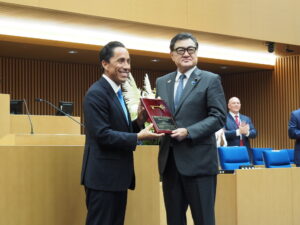
We began in Yokohama, San Diego’s first and longest-standing Sister City, ahead of our 70th anniversary next year. Mayor Gloria’s address to the Yokohama City Council reaffirmed a relationship that has connected our communities across generations. That history of trust matters when asking partners to build something new together.

Building on our maritime strengths

Some of our most consequential discussions focused on shipbuilding and maritime industrial collaboration.

The United States wants to expand its capacity to build and maintain ships, but longstanding challenges in workforce, infrastructure, and production make that difficult. San Diego brings a substantial maritime economy, major shipbuilding and repair operations, and emerging capabilities in autonomous systems, while Japan brings deep expertise in ship design, manufacturing, and industrial processes.

Our meetings with Japan’s Ministry of Land, Infrastructure, Transport, and Tourism (MLIT) and the Ministry of Defense’s Acquisition, Technology, and Logistics Agency (ATLA) explored how those strengths could work together.

The enthusiasm of our Japanese counterparts stood out. Partners were eager to understand what San Diego could offer and to bring a substantial contingent of decision-makers here to continue the discussion. A win: MLIT plans to lead a reverse trade mission to San Diego this November.
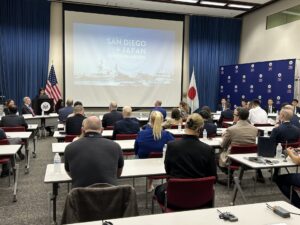
San Diego State University is an important part of this opportunity. Building on its ship design capabilities and agreement with South Korea’s Samsung Heavy Industries, stronger ties with Japanese industry could help establish new expertise with global reach right here in our region. For a university that recently achieved R1 research status and is developing its Mission Valley Innovation District, the possibilities extend across education, research, and industry.

This is where deliberate economic development can make a difference: Recognizing a national need, organizing our regional strengths, and bringing the right partners to the table.

Opening doors for investment and innovation

Our “Spotlight on San Diego” investment attraction event brought together 220 attendees, including executives from SoftBank, Mitsubishi Electric, Sumitomo Pharma, and dozens of other Japanese companies with the experience and capacity to make substantial investments in our region.
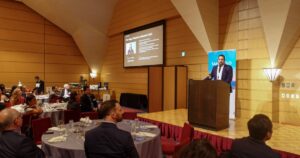
What struck me was the caliber of decision-makers in the room and the opportunity to put San Diego directly in front of companies capable of shaping our region’s next chapter.

We also opened doors for small businesses and startups building their international presence. WTCSD’s MetroConnect companies pitched at Kyocera’s R&D Center, while San Diego life sciences companies shared their breakthroughs in the heart of Osaka’s biomedical cluster.
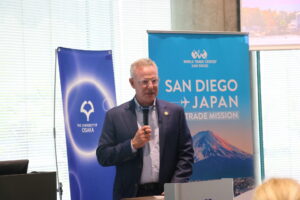
Meetings at the University of Osaka and Nakanoshima Qross created opportunities to deepen connections among life sciences researchers, entrepreneurs, and industry partners.

In semiconductors, we explored how San Diego’s strengths in chip design and edge AI could complement Japan’s manufacturing and materials expertise. At Kyoto Fusioneering, discussions with General Atomics and UC San Diego focused on the partnerships and infrastructure needed to move fusion toward commercial use.

There were lessons to bring home, too. Our exchange with Mori Building offered a firsthand look at how Tokyo integrates density, green space, mobility, and culture into ambitious urban development. And conversations with Japan Airlines continued the case for expanded connectivity, building on daily service between San Diego and Tokyo.

The work continues in San Diego

The value of this trade mission will grow through sustained engagement. November’s maritime delegation will give Japanese partners a closer look at our assets and an opportunity to refine practical areas of collaboration. In early February, we will invite attendees from the Spotlight on San Diego event to a follow-on event here at home to explore investment opportunities firsthand.

Our goal is to turn these relationships into investment in San Diego, new business for local companies, and capabilities that support good jobs for years to come.

These efforts will also inform our broader direction. On November 17 at BCG, we invite you to join the launch of WTCSD’s updated ‘Go Global: Trade & Investment Strategy.’ The first iteration, released in 2015, helped shape a decade of international economic development for San Diego. This next chapter will help set our course for the decade ahead.

As we do that work, we want to hear from you. Share your ideas, your successes, and the challenges shaping your decisions. Help us understand the economy through your eyes. Great economic development depends on that exchange and on our ability to turn what we learn into action.

Japan reinforced my confidence in what San Diego can accomplish. We have capabilities the world needs and partners eager to work with us. Our responsibility now is to sustain that momentum and turn it into lasting opportunity for the people and businesses who call this region home.

Lucas Coleman
Lucas Coleman

Director, World Trade Center San Diego


A note from Lucas: Trade and San Diego in 2026

Playing offense in an uncertain 2026

Dear EDC investors and partners,

For those who joined us at board meeting in January to hear EDC VP Eduardo Velasquez present, one message was clear: Our regional economy is entering a period not simply of slowdown or acceleration—but of structural change.

The global economy is being rewired in real time. Trade relationships are being reassessed. Supply chains are shifting. Capital is flowing more selectively. And uncertainty—particularly around tariffs, court proceedings, and the upcoming 2026 U.S.-Mexico-Canada Agreement (USMCA) joint review—has become a defining feature of the landscape.

Here at home, the innovation drivers powering San Diego’s growth for more than a decade are beginning to show signs of strain. This is unfolding amid a more protectionist national posture, higher costs of capital, heightened geopolitical tension and wartime, and rapid advances in artificial intelligence that could reshape industries almost overnight.

Just last month, the Supreme Court struck down the use of the International Emergency Economic Powers Act (IEEPA) as justification for broad-based tariffs imposed over the past year. The ruling reaffirmed that sweeping tariff authority rests with Congress, not the executive branch. While tariffs are not eliminated outright, the decision introduces further uncertainty around their continuation and potential reimbursement of duties already paid. For companies on the ground, the message is clear: Trade policy remains fluid.

Time and again, we hear from businesses like yours that uncertainty—more than any single policy—is the primary concern of 2026.

The proof is in the data

Periods of trade volatility are not new. In 2018, amid similar tensions, EDC and WTCSD commissioned our North American Trade & Competitiveness Study to better understand the cross-border economy defining the Cali Baja region and to equip leaders with credible data.

Last November, we refreshed that work with the release of our Binational Trade & Competitiveness Report—a comprehensive assessment of the economic engine powering our region.

The findings are clear. Nearly 95,000 regional jobs are supported by binational trade. Since the USMCA took effect in 2020, trade with North American partners has grown by nearly one-third and continues moving up the value chain into sectors such as medical devices, aerospace, and semiconductors. Ninety-seven percent of San Diego’s goods exports go to Mexico alone, underscoring the deeply integrated nature of our intermediate goods trade. Meanwhile, services exports have risen 54 percent in recent years.

Trade is not a side story—it is the bloodstream of our innovation ecosystem.

Building on this foundation, we are now refreshing our Go Global: Trade & Investment Plan, the framework that launched WTCSD more than a decade ago. In partnership with Boston Consulting Group and regional stakeholders, we will conduct new analysis and executive engagement to ensure our roadmap through 2030 reflects today’s global realities. We invite you to join this initiative and consider sponsoring the upcoming report.

MetroConnect: Building resilience where it matters

While we focus on long-term positioning, we remain committed to near-term resilience. Our small and mid-sized businesses must be ready.

Last month, we welcomed 15 companies into MetroConnect VIII, our flagship international sales accelerator. Replicated across North America and recognized with a Presidential “E” Award in 2023, the program provides structured export training and more than 200 hours of no-cost expert consulting support through our role as the region’s official Export SBDC.

Competitiveness is built not in calm moments, but through preparation and deliberate action.

Japan 2026: Playing offense

As we take on 2026, we intend to play offense.

Asia now accounts for roughly half of global foreign direct investment flows. Within that trend, Japan stands out as the largest foreign investor in the U.S. and, over the past decade, the top foreign investor in San Diego County. Prime Minister Sanae Takaichi has pledged $550 billion in new U.S.-bound investment in the coming years, emphasizing defense, energy, and security—sectors where San Diego holds distinct strengths.

This fall, WTCSD will lead a delegation of approximately 35 business leaders to Tokyo, Yokohama, and Osaka. These trade missions are not symbolic; they are strategic.

We annually position San Diego as a premier landing zone for investment, engage senior government and corporate leaders, and align our region with the next wave of trusted global capital flows. In a world where reliability increasingly defines opportunity, Japan is a natural partner—and San Diego is a natural platform.

Looking ahead

We are entering 2026 with clear priorities: Strengthen our competitive advantages, deepen trusted global partnerships, and convert regional strengths into global relevance. The next era of globalization will be more selective, and more strategic. Regions that prepare early and act deliberately will outperform those that wait for certainty to return.

We invite you to engage—whether by supporting MetroConnect companies, joining us for an upcoming Global Competitiveness Council meeting, maximizing opportunity for our Japan trade mission, or contributing to our refreshed global strategy. Together, we can ensure that San Diego not only weathers the storms ahead, but emerges stronger, more globally connected, and more competitive than ever.

Lucas Coleman
Lucas Coleman

Director, World Trade Center San Diego

More from WTCSD

Meet the MetroConnect VIII companies!

These 15 San Diego companies are going global

In February 2026, with Mayor Todd Gloria and underwriters Booz Allen Hamilton, JPMorganChase, and Qualcomm, World Trade Center San Diego (WTCSD) and San Diego and Imperial SBDC Network unveiled the eighth cohort of 15 companies selected to participate in MetroConnect, the region’s comprehensive international sales accelerator.

Since the program’s debut in 2015, 110 MetroConnect alumni have collectively added 357 new jobs to the region, signed more than 552 new contracts, and set up 28 new overseas facilities. Cohort companies grow their exports by an average of 66 percent and revenues by 45 percent as part of the program.

Alumni include Novo Brazil Brewing Co., Access Trax, Aquacycl, White Labs, Dr. Bronner’s, Scientist.com, Cloudbeds, Cypher Genomics (acquired by Human Longevity Inc.), and many more.

Meet the MetroConnect VIII companies:

  1. Activbody
  2. AquaPoro
  3. BlueNalu
  4. Commonlands
  5. FoxFury
  6. Gear Hugger
  7. Honest Medical
  8. HyperKelp
  9. MAKESafe Tools
  10. Mission Brewery
  11. Neet Sheets
  12. OPOTEK
  13. Precision Measurement Engineering
  14. Sipwell Wine Co.
  15. Tag-N-Trac

Learn about the companies

The MetroConnect program is highly competitive, with just 15 companies selected based on a variety of criteria, including interest in new foreign markets, assessed impact of funds, current international traction and more. Applicants were assessed by a panel of senior level representatives from Biocom, Booz Allen, JPMorganChase, SDSU’s Wendy Gillespie Center for Advancing Global Business, U.S. Commercial Service, and WTCSD.

“Since 2015, the City of San Diego has partnered with MetroConnect to help local companies compete and succeed in the global economy,” said San Diego Mayor Todd Gloria. “Programs like this connect San Diego businesses to new markets, support job creation here at home, and strengthen the innovation economy that powers our region. We’re committed to backing homegrown companies as they scale, export, and take San Diego’s ideas to the world.”

Why go global?

Amid economic uncertainty, it is more important than ever to help local SMEs build resilience by facilitating increased sales in global markets.

In 2024 alone, San Diego exported $34.5 billion in goods overseas, as well as billions more in services like software, cybersecurity, engineering and research. SMEs produce 92 percent of those goods—driving home the importance of programs like MetroConnect.

“JPMorganChase is proud to support San Diego businesses and their global growth,” said Aaron Ryan, San Diego Region Manager, JPMorganChase. “MetroConnect has a strong track record of helping local companies drive increased revenue through effective export strategies, making them more competitive, efficient, and successful here at home. We’re proud to continue our commitment to supporting San Diego’s business community.”

Next up for MetroConnect VIII

The cohort will gain access to a suite of resources to support expansion into international markets, including executive workshops, mentorship and complimentary consulting from multinational corporations, and up to $30,000 in grant funding.

“The next few years present a key opportunity for San Diego businesses looking to build resilience in a shifting economic and trade landscape,” said Nikia Clarke, executive director of WTCSD. “The MetroConnect program remains a dedicated partner to these businesses, equipping San Diego’s growing firms to compete in global markets, help our region’s innovation change lives around the world, and create quality jobs here at home.”

Looking to grow your business internationally?

World Trade Center San Diego works directly with companies—free of charge—to help them expand internationally and grow in San Diego. Whether your small company is interested in learning about exporting and international growth, or your growing company is ready to export and expand internationally, WTCSD is here to help.

Register your interest for the next cohort: MetroConnectSD.org

Interested in sponsoring MetroConnect? Contact Lucas Coleman at lc@sandiegobusiness.org.

WTCSD and San Diego and Imperial SBDC Network unveiled the new cohort at a community event at BCG San Diego. WTCSD is the Export Specialty SBDC for San Diego and Imperial Valley and works to cultivate a regional pipeline of export-ready firms.