A note from our WTCSD Director: Japan trade mission reflections

San Diego to Japan 2026

Dear EDC investors and partners,

In March, I wrote that San Diego needed to play offense in an uncertain global economy. We committed to leading with data, deepening trusted partnerships, and positioning our region for investment in the industries where we have distinct strengths.

Earlier this month, we brought that commitment to Japan.

Joined by Mayor Todd Gloria, Congressman Scott Peters, and leaders from across San Diego’s business and research community, World Trade Center San Diego (WTCSD) led our most ambitious trade mission yet: three major cities, five days, and more than 25 meetings and programs across Tokyo, Yokohama, and Osaka.

We returned with promising opportunities and partners already preparing to visit San Diego to advance them.

Why Japan matters

Japan has contributed $7.6 billion in foreign direct investment to San Diego since 2015, making it one of our region’s most important investment partners. Companies such as Kyocera have invested here for decades, supporting engineering, advanced manufacturing, and connections to global supply chains. Our universities and research institutions maintain relationships that expand what we can accomplish here at home.

Those ties provide a foundation for the next generation of collaboration. As the United States and Japan seek to strengthen industrial capacity and advance critical technologies, San Diego has much to contribute. We designed this trade mission around areas where those priorities intersect with our strengths, and where Japanese partners bring complementary capabilities.
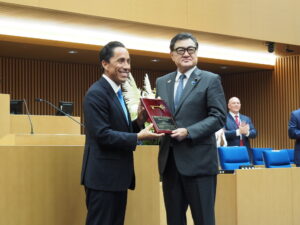
We began in Yokohama, San Diego’s first and longest-standing Sister City, ahead of our 70th anniversary next year. Mayor Gloria’s address to the Yokohama City Council reaffirmed a relationship that has connected our communities across generations. That history of trust matters when asking partners to build something new together.

Building on our maritime strengths

Some of our most consequential discussions focused on shipbuilding and maritime industrial collaboration.

The United States wants to expand its capacity to build and maintain ships, but longstanding challenges in workforce, infrastructure, and production make that difficult. San Diego brings a substantial maritime economy, major shipbuilding and repair operations, and emerging capabilities in autonomous systems, while Japan brings deep expertise in ship design, manufacturing, and industrial processes.

Our meetings with Japan’s Ministry of Land, Infrastructure, Transport, and Tourism (MLIT) and the Ministry of Defense’s Acquisition, Technology, and Logistics Agency (ATLA) explored how those strengths could work together.

The enthusiasm of our Japanese counterparts stood out. Partners were eager to understand what San Diego could offer and to bring a substantial contingent of decision-makers here to continue the discussion. A win: MLIT plans to lead a reverse trade mission to San Diego this November.
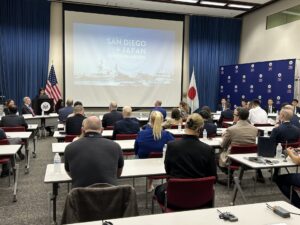
San Diego State University is an important part of this opportunity. Building on its ship design capabilities and agreement with South Korea’s Samsung Heavy Industries, stronger ties with Japanese industry could help establish new expertise with global reach right here in our region. For a university that recently achieved R1 research status and is developing its Mission Valley Innovation District, the possibilities extend across education, research, and industry.

This is where deliberate economic development can make a difference: Recognizing a national need, organizing our regional strengths, and bringing the right partners to the table.

Opening doors for investment and innovation

Our “Spotlight on San Diego” investment attraction event brought together 220 attendees, including executives from SoftBank, Mitsubishi Electric, Sumitomo Pharma, and dozens of other Japanese companies with the experience and capacity to make substantial investments in our region.
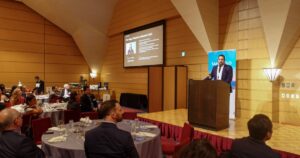
What struck me was the caliber of decision-makers in the room and the opportunity to put San Diego directly in front of companies capable of shaping our region’s next chapter.

We also opened doors for small businesses and startups building their international presence. WTCSD’s MetroConnect companies pitched at Kyocera’s R&D Center, while San Diego life sciences companies shared their breakthroughs in the heart of Osaka’s biomedical cluster.
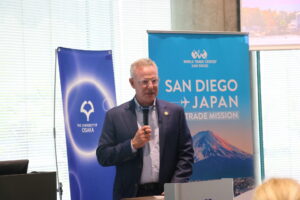
Meetings at the University of Osaka and Nakanoshima Qross created opportunities to deepen connections among life sciences researchers, entrepreneurs, and industry partners.

In semiconductors, we explored how San Diego’s strengths in chip design and edge AI could complement Japan’s manufacturing and materials expertise. At Kyoto Fusioneering, discussions with General Atomics and UC San Diego focused on the partnerships and infrastructure needed to move fusion toward commercial use.

There were lessons to bring home, too. Our exchange with Mori Building offered a firsthand look at how Tokyo integrates density, green space, mobility, and culture into ambitious urban development. And conversations with Japan Airlines continued the case for expanded connectivity, building on daily service between San Diego and Tokyo.

The work continues in San Diego

The value of this trade mission will grow through sustained engagement. November’s maritime delegation will give Japanese partners a closer look at our assets and an opportunity to refine practical areas of collaboration. In early February, we will invite attendees from the Spotlight on San Diego event to a follow-on event here at home to explore investment opportunities firsthand.

Our goal is to turn these relationships into investment in San Diego, new business for local companies, and capabilities that support good jobs for years to come.

These efforts will also inform our broader direction. On November 17 at BCG, we invite you to join the launch of WTCSD’s updated ‘Go Global: Trade & Investment Strategy.’ The first iteration, released in 2015, helped shape a decade of international economic development for San Diego. This next chapter will help set our course for the decade ahead.

As we do that work, we want to hear from you. Share your ideas, your successes, and the challenges shaping your decisions. Help us understand the economy through your eyes. Great economic development depends on that exchange and on our ability to turn what we learn into action.

Japan reinforced my confidence in what San Diego can accomplish. We have capabilities the world needs and partners eager to work with us. Our responsibility now is to sustain that momentum and turn it into lasting opportunity for the people and businesses who call this region home.

Lucas Coleman
Lucas Coleman

Director, World Trade Center San Diego

 

Mayor Gloria, Rep. Peters to lead WTCSD Japan trade mission to strengthen economic ties in Indo-Pacific

WORLD TRADE CENTER SAN DIEGO CONVENES REGIONAL DELEGATION TO CREATE LOCAL JOBS, EXPAND SAN DIEGO GLOBAL IDENTITY

San Diego Mayor Todd Gloria, Congressman Scott Peters, and World Trade Center San Diego (WTCSD)—the international team at San Diego Regional Economic Development Corporation (EDC)—are leading a 2026 trade delegation to Japan. During the September 7–11 trade mission, business, civic, and academic leaders will build partnerships across defense and maritime dual-use technologies, AI and semiconductors, life sciences, and urban development. 

As trade policy uncertainty reshapes the global economy, it is more important than ever for San Diego companies and institutions to strengthen ties with trusted international partners. Japan—San Diego’s second-largest foreign investor and a global leader in advanced manufacturing, semiconductors, robotics, shipbuilding, life sciences, and emerging technologies—offers significant opportunities for collaboration with San Diego’s innovation economy. This trade mission will explore new pathways for investment, market access, research collaboration, and business connectivity while reinforcing San Diego’s strategic role in the Indo-Pacific. 

“San Diego is open for business, and I’ve seen firsthand what happens when we show up and build relationships around the world,” said Mayor Todd Gloria. “WTCSD trade missions create opportunities to attract investment, support job growth, and open new markets for San Diego businesses. Japan is one of our most important global partners, and as we approach 70 years of friendship between San Diego and Yokohama, we are building on that relationship to bring new investment, partnerships and opportunities home to our region.” 

“Now is the time to identify the right global partners to build the future together. Japan’s complementary expertise in developing and scaling critical technologies, along with its decades–long commitment to the San Diego binational region, make it a natural partner in this moment. That’s why we’re returning for our second trade mission to Japan in a decade, to turn momentum into impact here at home,” said Nikia Clarke, executive director of WTCSD and chief strategy officer at EDC. 

Over the five-day trade mission in Tokyo, Yokohama, and Osaka, the delegation will pursue new business and institutional partnerships and showcase San Diego as a destination for investment.

Agenda items include:

  • Celebrating 70 years of a Sister City partnership between San Diego and Yokohama, including a special address by Mayor Gloria to the Yokohama City Council and meetings with Yokohama’s city council president and other leadership—among other elected officials across the country.
  • A visit to the U.S. Naval Base at Yokosuka, the largest naval base outside of the U.S., with deep ties to San Diego
  • Advancing semiconductor and AI collaboration through meetings with Japanese industry and academic leaders—including Kyocera, RISE-A, and Yokohama Hardtech Hub—focused on pairing San Diego’s semiconductor design and edge AI strengths with Japan’s manufacturing and materials expertise. 
  • Driving fusion energy commercialization through a visit to Kyoto Fusioneering, a tour of the University of Osaka’s Institute of Laser Engineering, and discussions with General Atomics, UC San Diego, and Japanese partners on the technologies, infrastructure, and talent needed to commercialize fusion energy. 
  • Strengthening maritime and shipbuilding partnerships through meetings with Japan’s federal government agencies and the Port of San Diego, General Dynamics NASSCO, SAIC, and emerging defense technology company Firestorm Labs. 
  • Pitching the San Diego binational region for investment at a Tokyo investment summit spotlighting opportunities in dual-use technology, real estate, and R&D on both sides of the border for an audience of investment-ready companies. 
  • Deepening cooperation with Japan’s life sciences ecosystem through meetings at Osaka University and Nakanoshima Qross—a next-generation innovation hub bringing together hospitals, startups, researchers, pharmaceutical companies, investors, and government—together with Biocom, San Diego R&D leaders, and investors. 

Delegates will participate in more than a dozen meetings, site visits, and networking events throughout the trade mission. The 40+ member, cross-sector San Diego delegation includes representatives from leading innovators Qualcomm, ASML, General Atomics, General Dynamics NASSCO, SAIC, Booz Allen Hamilton, and Mitsubishi Electric Ventures; growing startups Firestorm Labs, La Jolla Labs, Artis BioSolutions, AquaPoro Technologies, and ActivBody; public and civic leaders from the Port of San Diego, San Diego County Regional Airport Authority, Tijuana EDC, SANDAG, San Diego Tourism Authority, San Diego Regional Chamber of Commerce, and Biocom; research institutions UC San Diego, San Diego State University, and San Diego Zoo Wildlife Alliance; and more. 

“The U.S. is stronger when we work with trusted allies to build more resilient supply chains, strengthen our industrial base, and stay ahead in the technologies that will define our future,” said Congressman Scott Peters. “From shipbuilding and maritime capacity to semiconductors, defense, and fusion energy, this trade mission is about turning strong U.S.-Japan relationships into real economic and national security outcomes for San Diego and the country.” 

The trade mission is organized by World Trade Center San Diego, the international team at EDC, with support provided by the U.S. Embassy in Japan, and sponsorship by Ambix Ventures, Ganmi Corporation, Alaska Airlines, SAIC, and San Diego State University. 

Learn more about Japan and San Diego’s connection here, and follow along during the trade mission: #SDinJP 

SD-JP data sheet

WTCSD has previously led trade missions to France, Singapore, South Korea, The Netherlands, Germany, the United Kingdom, Vancouver, and more. This marks WTCSD’s second trade mission to Japan in the past decade. 

About World Trade Center San Diego
World Trade Center San Diego (WTCSD) is the international team within San Diego Regional Economic Development Corporation (EDC). WTCSD works to further San Diego’s global competitiveness by building an export pipeline, attracting and retaining foreign investment, and increasing San Diego’s global profile abroad. WTCSD.org

For media queries or other questions, contact:

Bree Burris
Bree Burris

Sr. Director, Communications & Community Engagement

A note from Lucas: Trade and San Diego in 2026

Playing offense in an uncertain 2026

Dear EDC investors and partners,

For those who joined us at board meeting in January to hear EDC VP Eduardo Velasquez present, one message was clear: Our regional economy is entering a period not simply of slowdown or acceleration—but of structural change.

The global economy is being rewired in real time. Trade relationships are being reassessed. Supply chains are shifting. Capital is flowing more selectively. And uncertainty—particularly around tariffs, court proceedings, and the upcoming 2026 U.S.-Mexico-Canada Agreement (USMCA) joint review—has become a defining feature of the landscape.

Here at home, the innovation drivers powering San Diego’s growth for more than a decade are beginning to show signs of strain. This is unfolding amid a more protectionist national posture, higher costs of capital, heightened geopolitical tension and wartime, and rapid advances in artificial intelligence that could reshape industries almost overnight.

Just last month, the Supreme Court struck down the use of the International Emergency Economic Powers Act (IEEPA) as justification for broad-based tariffs imposed over the past year. The ruling reaffirmed that sweeping tariff authority rests with Congress, not the executive branch. While tariffs are not eliminated outright, the decision introduces further uncertainty around their continuation and potential reimbursement of duties already paid. For companies on the ground, the message is clear: Trade policy remains fluid.

Time and again, we hear from businesses like yours that uncertainty—more than any single policy—is the primary concern of 2026.

The proof is in the data

Periods of trade volatility are not new. In 2018, amid similar tensions, EDC and WTCSD commissioned our North American Trade & Competitiveness Study to better understand the cross-border economy defining the Cali Baja region and to equip leaders with credible data.

Last November, we refreshed that work with the release of our Binational Trade & Competitiveness Report—a comprehensive assessment of the economic engine powering our region.

The findings are clear. Nearly 95,000 regional jobs are supported by binational trade. Since the USMCA took effect in 2020, trade with North American partners has grown by nearly one-third and continues moving up the value chain into sectors such as medical devices, aerospace, and semiconductors. Ninety-seven percent of San Diego’s goods exports go to Mexico alone, underscoring the deeply integrated nature of our intermediate goods trade. Meanwhile, services exports have risen 54 percent in recent years.

Trade is not a side story—it is the bloodstream of our innovation ecosystem.

Building on this foundation, we are now refreshing our Go Global: Trade & Investment Plan, the framework that launched WTCSD more than a decade ago. In partnership with Boston Consulting Group and regional stakeholders, we will conduct new analysis and executive engagement to ensure our roadmap through 2030 reflects today’s global realities. We invite you to join this initiative and consider sponsoring the upcoming report.

MetroConnect: Building resilience where it matters

While we focus on long-term positioning, we remain committed to near-term resilience. Our small and mid-sized businesses must be ready.

Last month, we welcomed 15 companies into MetroConnect VIII, our flagship international sales accelerator. Replicated across North America and recognized with a Presidential “E” Award in 2023, the program provides structured export training and more than 200 hours of no-cost expert consulting support through our role as the region’s official Export SBDC.

Competitiveness is built not in calm moments, but through preparation and deliberate action.

Japan 2026: Playing offense

As we take on 2026, we intend to play offense.

Asia now accounts for roughly half of global foreign direct investment flows. Within that trend, Japan stands out as the largest foreign investor in the U.S. and, over the past decade, the top foreign investor in San Diego County. Prime Minister Sanae Takaichi has pledged $550 billion in new U.S.-bound investment in the coming years, emphasizing defense, energy, and security—sectors where San Diego holds distinct strengths.

This fall, WTCSD will lead a delegation of approximately 35 business leaders to Tokyo, Yokohama, and Osaka. These trade missions are not symbolic; they are strategic.

We annually position San Diego as a premier landing zone for investment, engage senior government and corporate leaders, and align our region with the next wave of trusted global capital flows. In a world where reliability increasingly defines opportunity, Japan is a natural partner—and San Diego is a natural platform.

Looking ahead

We are entering 2026 with clear priorities: Strengthen our competitive advantages, deepen trusted global partnerships, and convert regional strengths into global relevance. The next era of globalization will be more selective, and more strategic. Regions that prepare early and act deliberately will outperform those that wait for certainty to return.

We invite you to engage—whether by supporting MetroConnect companies, joining us for an upcoming Global Competitiveness Council meeting, maximizing opportunity for our Japan trade mission, or contributing to our refreshed global strategy. Together, we can ensure that San Diego not only weathers the storms ahead, but emerges stronger, more globally connected, and more competitive than ever.

Lucas Coleman
Lucas Coleman

Director, World Trade Center San Diego
More from WTCSD

Investing in San Diego: Reflections on our 2025 trade mission to France

San Diego to France 2025

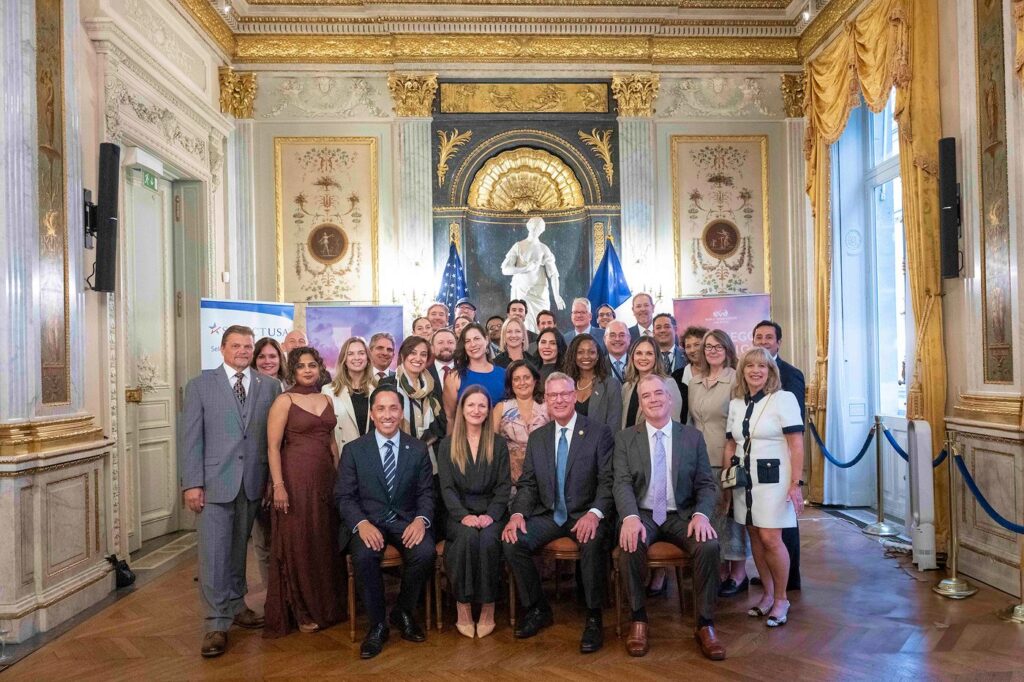
Wheels up after another successful trade mission—our eighth since relaunching World Trade Center San Diego as a public-private partnership focused on creating jobs at home by building opportunities abroad. In late September 2025, a cross-sector coalition of more than 30 San Diego business, academic, and civic leaders traveled to France, led by Representative Scott Peters and Mayor Todd Gloria.

The timing could not have been more critical. Markets are volatile, supply chains are shifting, and global policy is in flux. Yet, beneath this uncertainty lies opportunity: The chance to forge partnerships that create stability, unlock investment, and drive job growth. As Representative Peters reminded us during the trip, France is one of America’s oldest allies—and these strong subnational ties matter more than ever when federal commitments to science, energy transition, and global collaboration are under pressure.

Over the course of the week, the San Diego delegation made major strides:

  • Strengthening research ties: UC San Diego and San Diego State University advanced collaborations with French research institutes like CNRS in chemistry and marine biology.
  • Pitching San Diego to investors: With the U.S. Embassy and Dentons, we showcased San Diego’s growth sectors to more than 30 French companies, while Sanofi hosted a wide-ranging discussion on AI, mRNA, and U.S. expansion.
  • Driving the clean energy future: General Atomics marked its contribution to ITER, the world’s largest scientific collaboration, while leading efforts to commercialize fusion energy back in California. (Stay tuned for a deep dive into fusion in EDC’s upcoming study!)
  • Expanding city-to-city ties: The City of San Diego signed a new Sister City Agreement with Marseille, opening the door for deeper collaboration in ports, blue tech, life sciences, and tourism, while Biocom and Eurobiomed doubled down on their partnership to support life sciences companies across the Atlantic.
  • Maximizing global events: San Diego partners engaged with Paris Olympics 2024 to ensure our region captures economic benefits from LA28 and the 2026 World Cup.

These are more than symbolic wins—they are investments in San Diego’s future. Every strengthened research partnership, every pitch to global investors, every commitment from an international company represents jobs and opportunity here at home.

As Mayor Gloria so often reminds us, San Diego has both beauty and brains. Our team takes great pride in marketing San Diego to partners near and far, but nothing is more powerful than showing up and telling our story face-to-face. Our delegation did just that—showcasing our region to French partners and investors. And this last week in France is just the tip of the iceberg: The real work of a trade mission is in the months prior that set the stage, and the weeks and months after, when the impacts become clear.

A special thank you to the nearly three dozen San Diego delegates, from global employers like Qualcomm, ASML, Cubic Corporation, and General Atomics; to small businesses and venture investors including Ambix Ventures, GEN2X, and La Jolla Labs; and our research universities, trade associations, and civic leaders—all of whom make this mission possible. Convened by the founding partners of World Trade Center San Diego—the Port of San Diego, San Diego International Airport, and the City of San Diego—this coalition proves the power of showing up, together.

Nikia Clarke
Nikia Clarke

Chief Strategy Officer, EDC; Exec. Director, WTCSD

Rep. Peters, Mayor Gloria to lead France trade mission to strengthen economic ties with EU

WORLD TRADE CENTER SAN DIEGO CONVENES REGIONAL LEADERS TO HELP SAN DIEGO BUSINESSES EXPAND GLOBALLY, CREATE LOCAL JOBS

In order to foster vital global economic partnerships, Congressman Scott Peters, San Diego Mayor Todd Gloria, and World Trade Center San Diego (WTCSD), the international team at San Diego Regional Economic Development Corporation (EDC), are leading a 2025 trade delegation to France. During the September 21–September 26 trade mission, business and civic leaders will promote the region’s key industries and seek to establish and strengthen business relationships across biotechnology, clean energy, maritime technologies, and tourism.

As geopolitical tensions, trade policy uncertainty, and supply chain realignments reshape the global economy, it is more important than ever for San Diego companies and institutions to strengthen ties with trusted partners in Europe. France—home to leading firms in aerospace, life sciences, clean energy, and advanced manufacturing—offers natural synergies with San Diego’s innovation-driven economy. This trade mission aims to open new pathways for collaboration, investment, and market access that will help San Diego businesses remain competitive and resilient in a complex international landscape.

“With years of enduring collaboration between France and the U.S., now is the time to reinforce our regional commitments on the world stage,” said Congressman Scott Peters. “I am eager to join WTCSD on the road—now for the fifth time—to strengthen our global collaboration, drive investments in innovation and R&D, and bolster public-private partnerships across critical industries.”

San Diego and France have shared expertise in knowledge-intensive industries, including biotechnology, aerospace and defense, and clean energy. France is San Diego’s third largest foreign investor, contributing $5.6 billion since 2014. Further, the country’s research institutions have built long-lasting relationships with San Diego’s premier universities including San Diego State University and UC San Diego. France is ranked third in Europe for R&D spending, with the Paris region ranking first worldwide for FDI in R&D and corporate projects.

Companies have also capitalized on these synchronicities. On the heels of its acquisition of San Diego-based Inhibrx, France’s largest life sciences company Sanofi announced its commitment to invest at least $20 billion in the U.S. by 2030. French aerospace giant Safran also calls San Diego home, with aerospace jobs making up nearly one-fifth of the region’s innovation employment.

Boasting one of the cleanest energy grids in Europe and producing more than half of the European Union’s nuclear energy, France is also home to the ITER fusion energy project—the largest international scientific collaboration in the world. As the project aims to create fusion energy at power plant scale, San Diego-based General Atomics is one of its largest contributors, fabricating the world’s most powerful pulsed superconducting electromagnet for ITER.

“San Diego is an undeniable force in the global marketplace, and our future prosperity depends on strengthening those ties,” said Mayor Todd Gloria. “From pandas returning to the Zoo to nonstop flights to Amsterdam to new tech jobs here at home, global engagement is delivering real results for San Diegans. I’m proud to continue this work alongside World Trade Center San Diego and Congressman Scott Peters, and to celebrate our new Sister City partnership with Marseille“

Over the five-day trade mission in Paris, Marseille, and Saint-Paul-lès-Durance, San Diego will look to build lasting institutional relationships and attract foreign investment in industries critical to the future.

Agenda items include:

  • The celebration of key partnerships including a new San Diego-Marseille Sister City Agreement; an MOU between life sciences trade organizations Eurobiomed and Biocom; and agreements for France’s Centre National de la Recherche Scientifique to place leading researchers at San Diego State University and UC San Diego.
  • Opportunities to showcase San Diego’s innovation economy and major regional development projects to foreign investors.
  • Ahead of the 2028 Los Angeles Olympics, tours and meetings with the organizers of the Paris Olympics for a best-practices discussion on infrastructure, tourism, and economic development.
  • Meeting and tour of ITER, where General Atomics’ recently-completed central solenoid magnet will be housed—a significant accomplishment for San Diego and clean energy innovation.
  • Formal meetings with major entities with investment interests in both countries, including Sanofi, LVMH Group, Dentons, and the Port of Marseille.

“As the rules of global commerce continue to shift rapidly, San Diego firms of all sizes need strong partnerships to navigate this moment,” said Nikia Clarke, executive director of World Trade Center San Diego and chief strategy officer at San Diego Regional EDC. “That’s why we lead trade missions as a region—with a diverse cross-sector delegation of both the region’s largest and smallest employers working together to find opportunity in uncertainty.”

Delegates will participate in upwards of 15 meetings over the course of the trade mission, sharing best practices and driving business connectivity across many verticals. The nearly three dozen San Diego delegates include representatives from ASML, Ambix Ventures, Cubic Transportation Systems, General Atomics, San Diego Zoo Wildlife Alliance, and smaller businesses including French Bio Beach, GEN2X, and La Jolla Labs. Also in attendance are delegates from key agencies, academic institutions, and civic organizations such as the Port of San Diego, San Diego Regional Chamber of Commerce, SoCal French American Chamber of Commerce, San Diego Tourism Authority, Biocom, San Diego State University, University of California Office of the President, UC San Diego, and others

The trade mission is organized by World Trade Center San Diego, the international team at EDC, with assistance and support provided by the U.S. Embassy in France, the SoCal French-American Chamber of Commerce, and Dentons Paris, and sponsorship by Qualcomm, Ambix Ventures, General Atomics, and San Diego Tourism Authority.

Learn more about France and San Diego’s connection here, and follow along during the trade mission: #SDinFR. 

SD-FR data sheet

WTCSD has previously led trade missions to Singapore, South Korea, The Netherlands, Germany, the United Kingdom, Japan, Vancouver, and more.

About World Trade Center San Diego
World Trade Center San Diego (WTCSD) is the international team within San Diego Regional Economic Development Corporation (EDC). WTCSD works to further San Diego’s global competitiveness by building an export pipeline, attracting and retaining foreign investment, and increasing San Diego’s global profile abroad. WTCSD.org

For media queries or other questions, contact:

Bree Burris
Bree Burris

Sr. Director, Communications & Community Engagement

World Trade Center San Diego’s 2024 Annual Report

World Trade Center San Diego (WTCSD), the international affiliate of San Diego Regional Economic Development Corporation (EDC) and the regional leader on trade and investment, cultivates a pipeline of export-ready firms, maximizes foreign direct investment (FDI) opportunities, and enhances San Diego’s global identity. In WTCSD’s 2024 Annual Report, see how we helped San Diego companies participate in a globally connected economy to create quality local jobs, and make the San Diego region more prosperous, competitive, and resilient.

WTCSD’S CORE PILLARS

  • Exports: Supporting exporters creates quality jobs and builds resiliency in small businesses. WTCSD grows regional exports by facilitating sustainable connections to customers and markets for local firms.
  • Investment: Foreign investment strengthens competitive industry clusters and enables the expansion of local companies. WTCSD assists investing companies and supports international air service expansion.
  • Global Identity: A strong global reputation for innovation makes the region more competitive and connected. WTCSD communicates the impact of global trends on the regional economy and stewards relationships with the markets that matter most for growth.

Exports

Priority: As the region’s Export Specialty Small Business Development Center (SBDC), WTCSD cultivates a pipeline of export-ready firms, and supports these companies in their efforts to grow in international markets.

  • WTCSD kicked off its seventh MetroConnect cohort, awarding 15 San Diego companies in tech, life sciences, and consumer goods $175,000 in grants and equipping them with translation software and workshops to access international markets.

  • Export SBDC at WTCSD supported 120 companies via one-on-one counseling and webinars, including helping San Diego companies win $39,476 in STEP funding for export activities.

Investment

Priority: Maximize foreign investment opportunities for the region by building and institutionalizing linkages with strategic markets abroad, as well as better leveraging local companies, partners, and assets.

  • Following WTCSD’s 2022 Netherlands trade mission, San Diego International Airport and KLM Royal Dutch Airlines announced a new direct flight between San Diego and Amsterdam, with thrice-weekly service starting May 2025.

  • WTCSD capitalized on the influx of foreign life sciences companies visiting San Diego during the 2024 BIO Convention by hosting an Invest in San Diego breakfast, with more than 100 global attendees heard remarks from Mayor Todd Gloria, WTCSD’s Executive Director Nikia Clarke, and leaders from Neurocrine, Avidity, Eli Lilly, and Element Biosciences.

Global Identity

Priority: Enhance the San Diego region’s reputation and visibility to underpin investment retention and attraction efforts, as well as global connectivity goals.

  • Representative Scott Peters, Councilmember Raul Campillo, and WTCSD led 2024’s trade mission to Singapore. The binational delegation of business and civic leaders promoted San Diego’s key industries, established and strengthened business relationships across biotechnology, medical devices, advanced manufacturing, and urban infrastructure.

  • Following WTCSD’s 2023 trade mission to South Korea, Gyeonggi Province Governor Dong-yeon Kim visited San Diego as part of a weeklong tour of California, where he toured UC San Diego, Illumina, Biocom, and threw out the first pitch at a San Diego Padres game. WTCSD supported the Korean government’s efforts to arrange a meeting with California Governor Gavin Newsom. 

READ THE FULL WTCSD 2024 ANNUAL REPORT →


GET INVOLVED

From one global gateway to another: Reflections on our 2024 trade mission to Singapore

San Diego to Singapore 2024

As we depart Singapore on the heels of World Trade Center San Diego’s seventh international trade mission, it is with a tremendous amount of gratitude for the broad coalition of San Diego leadership that joins us year after year all over the globe to deepen existing partnerships, explore new opportunities, and enthusiastically showcase the breadth and depth of the region’s economy.

Led this year by Congressman Scott Peters—his fourth time at the helm for WTCSD—the 2024 delegation included leadership from the Port, Airport and City of San Diego, UC San Diego and San Diego State University, large global employers like Qualcomm, Illumina, Cubic, ResMed, Austal, and Mitsubishi Electric, as well as small, high-growth innovators like Biolinq and Visaic, tourism powerhouses like the San Diego Zoo Wildlife Alliance, and ecosystem partners from across the binational region like Connect, the Chamber, the Tourism Authority, Tijuana EDC, and the Prebys Foundation.

This year we headed for another innovative, binational region by the sea, which is also the world’s premier gateway to Asia: Singapore. In a moment for the global economy characterized by geopolitical uncertainty, rapidly shifting supply chains in advanced industries, and climate action and energy transition, this city state of only six million people is partnering with industry to create solutions for today’s challenges.

  • Despite being a high-cost destination with limited land and natural resources, advanced manufacturing makes up 20 percent of Singapore’s GDP—almost double San Diego’s numbers—due to world-class vertical manufacturing facilities co-designed by the government and companies including San Diego firms Illumina and ResMed.
  • Nearly 400,000 people cross into Singapore from Malaysia to work every day—almost double the volume of our busy border with Tijuana—and the border authority is piloting new, fully automated clearance technology to increase efficiency as well as partnering with Malaysia on a new rapid transit system that will open in 2026.
  • From rooftop greenery and food production, water desalination and underground cooling systems, to engineering the bayfront to naturally protect the city from future sea level rise, Singapore’s intentional regional planning efforts have created a city that is simultaneously one of the densest in the world as well as one of the smartest and one of the greenest.

Our goals for these trade missions are threefold:

    1. To facilitate transactional wins that bring jobs and investment to San Diego.
    1. To enable best practice sharing to help us address our biggest regional challenges.
    1. To share San Diego’s innovation story in a market that matters for our economic future.

Over a whirlwind three days filled with more than 15 meetings and events, our delegation hit all of these goals and then some.

Jobs and investment:

  • We held our Spotlight on San Diego event, in which 70 Singaporean investors and business leaders interested in investing in California heard from our delegates about big projects and opportunities in both San Diego and Tijuana in life sciences, strategic technology, and SDSU’s innovation district.
  • Small, high-growth San Diego companies pitched to Singapore’s institutional investment firm that funds innovation worldwide.
  • Port of San Diego called on a number of shipping companies in order to attract more liner service to San Diego.
  • MELIC Ventures—the venture arm of Mitsubishi Electric—established a proof-of-concept agreement with a maritime drone company. 

Partnerships:

  • San Diego Zoo Wildlife Alliance and Singapore’s Mandai Wildlife Group exchanged knowledge on strategic planning and critical global wildlife conservation, all financed by visitor income.
  • The Port authorities of San Diego and Singapore began discussions on an MOU focused on green and sustainable shipping corridors.
  • The City of San Diego explored housing policy and infrastructure with the Centre for Liveable Cities, Singapore’s Ministry of National Development, and the developer firms that partner together to house every Singaporean.
  • UC San Diego and National University Singapore deepened a recent MOU on digital health, artificial intelligence, and entrepreneurship with plans to establish a soft landing exchange for entrepreneurs.

Global identity:

  • We met with Singaporean leadership from the Deputy Prime Minister, the Economic Development Board, Enterprise Singapore, A*Star and dozens of others in order to share what makes San Diego so special.
  • Companies with big Singapore operations—like Illumina, ResMed, and Qualcomm—shared their successes and reminded our hosts that they represent San Diego technology and innovation.
  • Our final reception—held at the residence of the U.S. Ambassador per WTCSD trade mission tradition—brought together 100 partners and stakeholders from across the region to cement bonds and celebrate a productive and successful week.

As is always the case with our trade missions, the nonstop few days in the market get most of the attention. However, the bulk of the work happens in the months before—when the WTCSD team works diligently with and through so many of you to identify opportunities and priorities—and even more importantly in those that follow—when deals get inked, investments and expansions are confirmed, and partnerships deepen.

So, as we return home to San Diego—where the sun is shining and the Padres are in the playoffs—we thank our delegates again for taking the time from very busy calendars to travel with us and represent San Diego. And we also invite all of you to watch this space closely in the weeks and months ahead, because we are just getting started.

Nikia Clarke
Nikia Clarke

Chief Strategy Officer, EDC; Exec. Director, WTCSD

Rep. Peters, WTCSD to lead Singapore trade mission to strengthen economic ties in Asia

WORLD TRADE CENTER SAN DIEGO CONVENES REGIONAL LEADERS TO HELP BUSINESSES IN SAN DIEGO MEGA-REGION EXPAND GLOBALLY, CREATE LOCAL JOBS

In order to foster vital global economic partnerships, Congressman Scott Peters, San Diego Councilmember Raul Campillo, and World Trade Center San Diego (WTCSD), the international arm of San Diego Regional Economic Development Corporation (EDC), are leading the 2024 trade delegation to Singapore. During the September 30—October 4 trade mission, business and civic leaders will promote the region’s key industries and seek to establish and strengthen business relationships across biotechnology, medical devices, advanced manufacturing, and urban infrastructure.

A generational shift in U.S. industrial strategy aimed at reducing reliance on China, coupled with federal legislation like the Chips and Science and Infrastructure Investment and Jobs Acts, position Singapore as a natural partner in advanced industries. As national governments continue to incentivize the reshoring and nearshoring of activities, gateway regions like Singapore-Malaysia in Asia and San Diego-Tijuana in the Americas are perfectly positioned to take advantage of these global shifts.                                                    

“Singapore’s strategic position and expertise in innovation industries make it an ideal partner for our San Diego-Tijuana binational region,” said Congressman Scott Peters. “This trip with World Trade Center San Diego will help strengthen our global brand, drive investment, and bolster the resilience of our local businesses.”

Home to the world’s busiest transshipment port and border crossing, Singapore is a highly developed center for global trade and a hub for U.S. companies conducting business in Asia. Situated in one of the most strategically important locations on the planet, the city-state boasts a free and business-friendly economy with low corruption, low tax rates, a skilled workforce, and world-class infrastructure.

As the U.S. strengthens its alliances in Southeast Asia, San Diego finds in Singapore an economy with shared expertise in knowledge-intensive industries, including artificial intelligence, medical device manufacturing, and information communications technology. Singapore boasts satellite operations for some of San Diego’s premier innovators including Qualcomm, ResMed, and Illumina. Further, Singapore has poured $12.8 billion in FDI into the U.S. since 2019 in industries such as manufacturing, information communications technology, and energy. The U.S. has matched that amount, investing $12.5 billion during the same time period. Looking closer, Singapore is the #10 country investing venture capital into San Diego by deal count, just behind Denmark and India (2014—2020), primarily in the medical equipment and technology industries. Singapore also shares in San Diego’s binational identity, with Singapore-Johor seeing nearly 1.6x the number of border crossings per day compared to San Diego-Tijuana’s border (450,000 and 283,000, respectively).

“Guided by data and shifting geopolitics, each year WTCSD leads a trade mission to a strategic international metro. For 2024, Singapore was a standout choice for our delegation of public-private leaders,” said Nikia Clarke, executive director of World Trade Center San Diego and senior vice president at San Diego Regional EDC. “As gateway regions, Singapore-Malaysia in Asia and San Diego-Tijuana in the Americas will anchor the critical supply chains of the future. We’re here to deepen international ties and maximize our economic impact.”

Over the four-day trade mission across Singapore, San Diego will look to build lasting institutional relationships and attract foreign investment in industries critical to the future.

Agenda items include:

  • The celebration of a recent partnership between UC San Diego and National University Singapore, as well the exploration of new opportunities around soft-landing space with Singapore commercial real estate developer CapitaLand
  • Opportunities to showcase San Diego-Tijuana and major regional development projects for foreign investors, including innovation developments by San Diego State University and Alexandria Real Estate Equities, Inc.
  • Local, small- to mid-sized businesses Biolinq and Visaic will pitch to global investment firm Temasek
  • Meetings with Port, Airport, Border, and infrastructure partners to better connect our regions through nonstop air and liner service, as well as sharing energy transition and urban development innovations
  • Government convenings with Deputy Prime Minister of Singapore Gan Kim Yong and other dignitaries
  • Formal meetings and tours of major employers in both regions, including Illumina, ResMed, as well as the Mandai Wildlife Group—a peer of the San Diego Zoo Wildlife Alliance

Delegates will participate in upwards of 15 meetings over the course of the trade mission, sharing best practices and driving business connectivity across many verticals. The two dozen San Diego delegates include representatives from Cubic, Mitsubishi Electric, Qualcomm, San Diego Zoo Wildlife Alliance, and smaller businesses including Visaic and Biolinq. Also in attendance are delegates from key agencies, academic institutions, and civic organizations such as Port of San Diego, San Diego International Airport, UC San Diego, San Diego State University, MiraCosta College, Tijuana EDC, San Diego Tourism Authority, Connect, and others.

“As San Diego’s Economic Development Chair, I have two key goals: creating high-paying jobs and lowering costs for families in our city,” said San Diego City Councilmember Raul Campillo. “International trade and partnerships with businesses in Singapore and elsewhere bring advanced technology, high-skill workers, and robust tourism and investment to our local region. This strengthens our economy and delivers benefits like more affordable products that our citizens will see in their day-to-day lives.”

The trade mission is organized by World Trade Center San Diego, the international team at EDC, with assistance and support provided by the U.S. Embassy in Singapore, and sponsorship by Qualcomm, Ambix Ventures, San Diego Tourism Authority, and the San Diego Zoo Wildlife Alliance.

Learn more about Singapore and San Diego’s connection here, and follow along during the trade mission: #SDinSG. 

WTCSD has previously led trade missions to South Korea, The Netherlands, Germany, the United Kingdom, Japan, Vancouver, and more.

For media queries or other questions, contact:

Bree Burris
Bree Burris

Sr. Director, Communications & Community Engagement

Reflections on our Korea Trade Mission

From San Diego to Korea: Collaborative partnerships to strengthen global competitiveness

It has been six years since World Trade Center San Diego—which EDC operates on behalf of the Port, the Airport, and the City of San Diego—ran its very first trade mission. Since then, we have taken annual targeted, cross-sector delegations to Canada, the UK, Japan, Germany, and the Netherlands. Led by Mayors and Members of Congress, flanked by Port, Airport, and University leadership, and accompanied by senior executives from our most innovative firms, these trade missions connect San Diego companies large and small to international markets, seek foreign investment that creates new jobs in our region, and tell the San Diego story: one of life-changing innovation and collaboration.

This year’s destination: Korea. And like every other year, San Diego showed up and impressed. Led by Mayor Todd Gloria—and joined this time by SANDAG and County Board of Supervisors Chairwoman Nora Vargas—this year’s trade delegation of more than 30 civic, academic, and corporate partners also included peer organizations like Biocom and the Tijuana and Imperial Valley EDCs, as well as companies like Qualcomm, Illumina, Dexcom, ASML, General Dynamics NASSCO, and more.

At a time when more than a trillion dollars of federal investments are aimed at modernizing American infrastructure, enabling a green energy transition, and building domestic capacity in strategic industries like semiconductors and biomanufacturing, Korea is a natural partner for the United States, as evidenced by the deepening collaboration between our two countries. Korea is second only to China in manufacturing intensity, and Korean firms produce almost 25 percent of all EV batteries and almost 60 percent of global memory chips used in phones and laptops.

Why Korea →

There is also perhaps no more complementary partner for an innovation incubator like San Diego than a country that scales innovation more efficiently than anywhere else.

The trade mission opened with a Sunday visit to the residence of the Governor of Gyeonggi-do, Korea’s largest and most dynamic province. Governor Kim and his cabinet hosted us for a roundtable discussion focused on revitalizing the MOU between the state of California and Gyeonggi. We delivered a letter from Governor Newsom and invited a return delegation to visit California in 2024 to continue the conversation on economic cooperation.

This set the stage for a whirlwind four days packed from morning to night with more than 15 briefings, meetings, and events:

  • With the help of Dentons and the U.S. Embassy, we convened representatives from more than 30 of the largest Korean companies for an Invest San Diego Luncheon. We provided an economic overview of investment opportunities throughout the binational mega-region, followed by quick pitches on manufacturing, energy, innovation, and real estate projects from Tijuana, Imperial Valley, and San Diego.
  • We visited the rapidly growing Korean offices of Illumina and Qualcomm, and announced a new partnership between San Diego’s Dexcom and Korean tech giant Kakao.
  • We toured and met with leadership of Samsung Biologics, which in just a few years has grown into the world’s largest contract manufacturer of biologics and is considering the location of a large investment in the United States.
  • We celebrated partnerships between UCSD and SDSU—both developing new state of the art innovation districts—and Seoul National and Yonsei Universities, two of South Korea’s finest.
  • We spent a day in the City of Incheon—a city of millions that has been master planned and developed on land reclaimed from the ocean over the last two decades and is now the innovation hub of the greater Seoul area. Incheon is also home to the international airport, completed in just eight years, as well as the Port, completed in four.

See the FULL agenda

Finally, we closed the trip with a VIP meeting with U.S. Ambassador to Korea Philip Goldberg to discuss the evolving political and economic environment in the region, followed by a reception at the Ambassador’s residence in the former legation district of Seoul. As is the tradition on these trade missions, this reception gave us an opportunity to reconnect with the hundreds of partners we met during the week, cement new friendships (and perhaps most importantly, make sure everyone knows which team to root for when the Padres play the Dodgers in the MLB opener in Seoul next March).

We returned home this week to a region in which the entire urban core is being reimagined—with massive mixed-use projects under construction from the border to the bay; to a country attempting to rebuild its infrastructure and establish new industries to take us into a cleaner, smarter future; and in a post-pandemic world where supply chains and geopolitical alliances are shifting rapidly.

One thing is clear: Our binational region has always been a remarkable place, but at this moment—with San Diego’s innovation ecosystem, Imperial Valley’s clean energy leadership, and Tijuana’s advanced manufacturing prowess—we can compete like never before. Add the right international partnerships like those we are building in Korea and elsewhere, and we have all the necessary pieces to anchor the supply chains of the future: collaboratively, efficiently, and sustainably.

Thank you to our sponsors Qualcomm, Dentons, and Townshend Venture Advisors, as well our partner the U.S. Embassy in South Korea for support on this trade mission.

Best,

Nikia Clarke
Nikia Clarke

Chief Strategy Officer, EDC; Exec. Director, WTCSD


Learn about WTCSD’s trade missions


Mayor Todd Gloria to lead South Korea trade mission to strengthen economic ties in Asia

WORLD TRADE CENTER SAN DIEGO CONVENES REGIONAL LEADERS TO HELP BUSINESSES IN SAN DIEGO MEGA-REGION EXPAND GLOBALLY, CREATE LOCAL JOBS

In order to foster vital global economic partnerships, San Diego Mayor Todd Gloria, SANDAG and San Diego County Board of Supervisors Chairwoman Nora Vargas, and World Trade Center San Diego (WTCSD), an affiliate of San Diego Regional Economic Development Corporation (EDC), are leading a trade delegation to South Korea. During the October 27—November 2 trade mission, business and civic leaders will promote the region’s key industries and seek to establish and strengthen business relationships across biotechnology, semiconductors, clean energy, and infrastructure.

Monumental federal legislation (IIJA, IRA, and CHIPS and Science Act), combined with a generational shift in U.S. industrial strategy aimed at reducing American reliance on China, have positioned South Korea as a natural partner in critical industries. As the federal government continues to incentivize the reshoring and nearshoring of activities aligned to national priorities, leaders from across San Diego, Imperial Valley, and Tijuana are maximizing growth through global connection.                         

“South Korea is a critical global market and a natural partner for San Diego as we share complementary strengths in the life sciences, clean energy, and biotechnology sectors,” said Mayor Todd Gloria. “I’m proud to again join the World Trade Center San Diego on a trade mission to strengthen business relationships and grow quality jobs here at home for San Diegans.”

Home to Asia’s third busiest cargo airport and seventh largest port, South Korea is an emerging hub for global trade and business. As the U.S. strengthens its alliances in East Asia, San Diego finds in South Korea an economy with shared expertise in knowledge-intensive industries, including personalized medicine, semiconductor research and manufacturing, and clean energy. South Korean-based companies directly employ more than 850 San Diegans, predominantly in the technology and manufacturing industries at companies like Samsung and Hyundai. Notably, the U.S. and South Korea hold the #1 and #2 spots, respectively, in global market share of the semiconductor industry. Further, South Korean investment into the U.S. is accelerating, with $18.2 billion in new investment since mid-2020 alone. South Korea is the #13 country investing venture capital into San Diego by deal count, closely behind Germany and Singapore (2014—2020), primarily in the pharmaceuticals and technology industries.

LEARN ABOUT THE TWO REGIONS

 “The binational mega-region has always been a remarkable place, but at this moment for the global economy, we can compete like never before,” said Nikia Clarke, executive director of World Trade Center San Diego and senior vice president at San Diego Regional EDC. “With San Diego’s innovation ecosystem, Imperial Valley’s clean energy leadership, and Tijuana’s advanced manufacturing prowess, we have all the necessary pieces to anchor the supply chains of the future: collaboratively, efficiently, and sustainably.”

“I am looking forward to showcasing the advancements in clean energy technology, life sciences, and port infrastructure to elevate the best of what our binational region has to offer and identify new partnerships with South Korea to foster innovation and economic growth for both our regions,” said SANDAG and San Diego County Board of Supervisors Chairwoman Nora Vargas. “This is an opportunity to increase trade and share new ideas that will help develop lasting solutions to improve our region’s infrastructure, transportation, and economy for the residents of San Diego County.”

Over the four-day trade mission in Seoul, Incheon, and Gyeonggi Province, San Diego will look to build lasting institutional relationships and attract foreign investment in industries that are critical to the future.

Agenda items include:

  • The celebration of a partnership between San Diego-based medtech company Dexcom and South Korean-based tech giant Kakao, which will enable Dexcom to bring its next-generation glucose monitoring capabilities to the South Korean market
  • Opportunities to showcase major regional development projects for foreign investors, including the Seaport Village redevelopment, Lithium Valley in Imperial County, as well as San Diego State University and UC San Diego’s campus expansions
  • Meetings with Port, Airport, and infrastructure partners to better connect our regions through nonstop air and liner service, as well as sharing energy transition innovations
  • Government convenings with the Governor of Gyeonggi and the Mayor of Siheung together with Mayor Todd Gloria and SANDAG and County Board of Supervisors Chairwoman Nora Vargas
  • Formal meetings and tours of major employers in both regions, including Qualcomm, Illumina, and Samsung Biologics

Delegates will participate in upwards of 15 meetings over the course of the trade mission, sharing best practices and driving business connectivity across many verticals. The two dozen San Diego delegates include representatives from Illumina, Qualcomm, Viasat, ASML, Cubic, General Dynamics NASSCO, Gafcon, and small businesses including Tioga Research and Nano PharmaSolutions. Also in attendance are delegates from key agencies, universities, and civic organizations such as Port of San Diego, San Diego International Airport, UC San Diego, San Diego State University, San Diego Association of Governments (SANDAG), Imperial Valley EDC, Tijuana EDC, and others.

The trade mission is organized by World Trade Center San Diego, an affiliate of the San Diego Regional EDC, with assistance and support provided by the U.S. Embassy in South Korea, and sponsorship by Dentons, Townshend Venture Advisors, and Qualcomm.

Follow along with the trade mission: #SDinKR

REFLECTIONS ON OUR KOREA TRADE MISSION

WTCSD.ORG

Thank you to our trade mission sponsors: