Local procurement means big impact: The power of the Anchor Institution Collaborative

Collaboration, one of San Diego’s greatest strengths, is at the core of the EDC’s Anchor Institution Collaborative: A partnership between the region’s largest buyers committed to using their combined purchasing power to strengthen our local economy.

Launched in 2020, the Anchor Institution Collaborative brings together San Diego universities, hospitals, utilities, and large companies around a shared goal of supporting small, local, and diverse businesses to drive inclusive economic growth.

Working with and through our largest buyers

EDC’s role has always been to work with and through large employers and entities that are physically bound to our region to create change that reaches across the business ecosystem. Local anchors—including CSU San Marcos, the San Diego International Airport, Dexcom, and others—have a powerful influence on how money and opportunity flow through the region.

These anchors drive real impact in San Diego, by buying locally and contracting with small and diverse suppliers. In 2024 alone, seven regional anchors we surveyed spent a combined $763 million with local diverse suppliers and $245 million with regional small businesses, representing 16 percent and five percent respectively of their total combined spend.

Looking ahead to 2026, the collaborative will continue to help anchor institutions identify strategic opportunities to expand local impact, through shared learning, goal-setting, and data collection. By continuing to align spend toward local, small, and diverse businesses, anchors can help create a stronger, more resilient economy for all of San Diego.

Investing in San Diego’s small business economy

Small businesses remain the backbone of San Diego’s economy, now accounting for 99 percent of all businesses and 59 percent of all jobs in the region. These companies create jobs, spark innovation, and bring character to every community.

While many small businesses struggle to compete with larger firms for contracts and cannot always offer comparable wages, securing a major contract from a large buyer is often a major turning point that enables these businesses to grow local quality jobs and better weather economic downturns. Our entire region prospers when small businesses can engage, compete, and win these contracts.

While spending toward small business represents only a portion of total anchor spending in San Diego, it signals a strengthening commitment among major employers to partner locally as global supply chains continue to shift. Of the data reported by the seven anchors surveyed, the share of spending directed toward small businesses increased by an average of 19 percent from 2023 to 2024. Though significant opportunities remain for anchors to further expand local procurement (particularly with small businesses), this growth reflects a meaningful deepening of their investment in the regional economy.

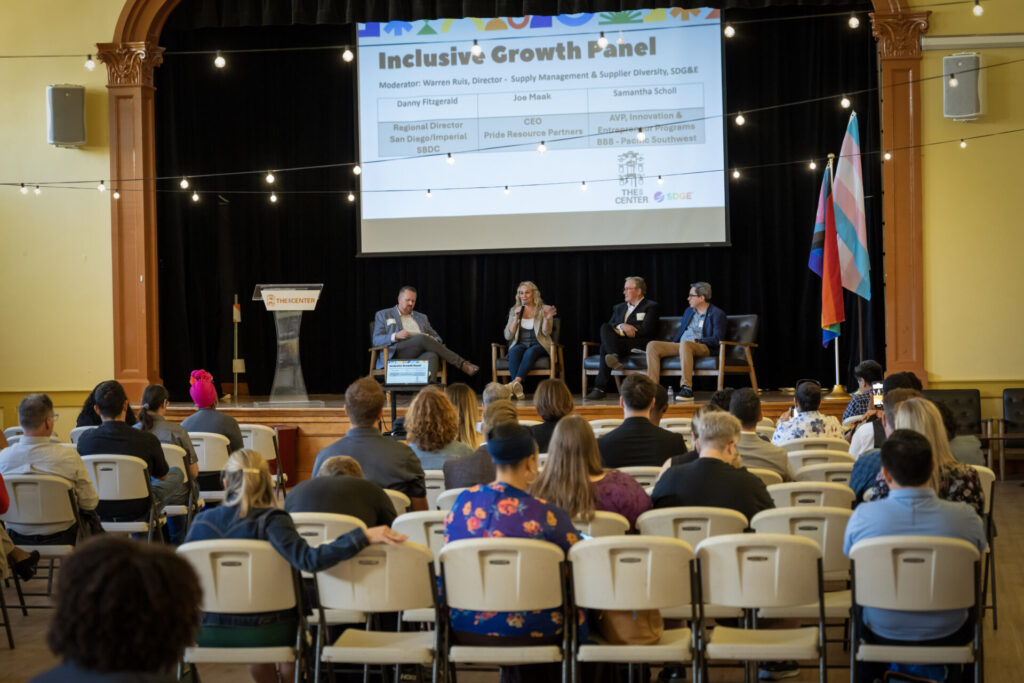
Now is a prime opportunity for small businesses to take advantage of this shift—anchor institutions are continuing to evolve their supply chain strategies to include supplier diversity initiatives, streamlined procurement processes, and new tools to connect with small vendors. For example, SDG&E’s Level Up webinar series is a collaboration with the San Diego and Imperial Small Business Development Center Network to help small businesses to gain the tools and confidence to compete for big contract opportunities. And UC San Diego’s Small Business First program works to direct contracts between $10,000 and $250,000 to certified small and diverse businesses when no large sourcing agreement exists. These efforts not only expand opportunities for small businesses but also maximize our region’s shared prosperity.

What’s next for the Anchor Institution Collaborative

In the coming year, EDC will support both big buyers and small businesses through continued partnership among the Anchor Institution Collaborative.

EDC will continue to help large buyers in the Collaborative expand contracting opportunities through shared learning, goal-setting, and data collection.

In turn, the Collaborative will invest in small business growth and job creation by developing a playbook for vendors, creating a guide outlining the requirements for doing business with anchor institutions, and exploring a fund to help small businesses overcome financial barriers such as insurance premiums, certifications, and compliance costs.

The goal is simple: To make San Diego a place where large institutions and small businesses grow together—where every purchasing decision contributes to a more inclusive, resilient, and thriving local economy.

A collective effort

Economic development doesn’t happen in isolation. It requires inclusion and collaboration across sectors, shared accountability, and a long-term commitment to the region’s people and businesses. The Anchor Institution Collaborative is proof that when our largest employers work together to invest in and lift the smallest, we can collectively strengthen our local supply chain and build economic resilience.

As we look to the year ahead, EDC invites big buyers—whether you represent a healthcare system or a homegrown company, a sports team or an education institution—to join the Collaborative and share resources, expand opportunity, and work together to ensure that San Diego’s growth benefits us all.

Interested in leveraging your company’s spend to support San Diego small businesses?

GET INVOLVED

To learn more, contact:

Lindsey Silvia
Lindsey Silvia

Sr. Manager, Economic Development

Advancing San Diego summer internships bridge education and industry

Advancing San Diego: Building talent pipelines

EDC’s Advancing San Diego (ASD) internship program, run in partnership with the Border Region Talent Pipeline K-16 Collaborative and Imperial Valley EDC, has transformed how students across San Diego gain early career experience, while helping local businesses address talent needs. In Summer 2025, the ASD program placed 210 interns at 110 companies across San Diego and Imperial Counties, creating an invaluable bridge between education and industry in high-growth, high-wage fields like engineering, computing, and business. This program plays a crucial role in addressing regional talent shortages, helping local companies access vetted, diverse talent and offering students paid, hands-on learning opportunities in high-demand industries.

Summer 2025 by the numbers

*Priority populations include low-income individuals, first-generation college students, current community college students or community college transfers, veterans and active-duty military students, and students with disabilities

Addressing the talent gap with community impact

At the heart of ASD’s mission is a commitment to reaching under-resourced communities, ensuring that students from diverse backgrounds gain valuable career experience while helping local businesses address critical talent needs. Companies apply each year by early spring to host students from Advancing San Diego Verified Programs to be interns. These Verified Programs are selected based on industry-determined criteria, including industry engagement, diversity, equity, and inclusion, as well as curriculum that teaches the most in-demand skills in computing, engineering, and business. This approach ensures that students’ skills align with evolving workforce demands, enhancing the overall impact of the internship experience.

EDC recruits local small to medium-sized businesses to host interns, and once companies are selected, students from Verified Programs apply for available internship roles. With more student applicants than available positions, students from priority populations receive preferred access to internship positions. In Summer 2025, 82 percent of interns identified with one or more priority populations, up nine percent from 2024. Importantly, the program provides financial support covering intern wages at a competitive rate. In 2025, local companies saved more than $1 million in payroll costs, ensuring businesses can prioritize mentorship and on-the-job training over recruitment logistics.

Real-world experience and career advancement

Each year, the internship program provides students with valuable work experience directly linked to their academic pursuits, equipping them with practical skills and career confidence. At the same time, companies benefit from student contributions. Surveyed companies shared that hosting interns improved their outlook on early-career talent: 91 percent agreed or strongly agreed that the program increased their likelihood of hiring a university student, and 82 percent said the same for community college students. For employers, this means a pipeline of highly motivated, well-prepared candidates who bring immediate value.

Day in the Life of a San Diego Intern video campaign

During the 2025 summer internship program, ASD launched its first “Day in the Life of a San Diego Intern” video campaign, inviting interns to share a glimpse into their internship experience through short videos. Thanks to generous donations from the San Diego Padres, San Diego FC, San Diego Wave FC, San Diego Zoo Wildlife Alliance, and SeaWorld San Diego, ASD was able to give five lucky winners tickets to signature San Diego experiences. The video campaign gave ASD interns the opportunity to share their professional experiences with the local business community and increase exposure of careers in San Diego to diverse groups of local young talent.


“After our sixth year partnering with this valuable program, Left Coast Engineering has hosted more than a dozen interns across electrical, mechanical, and aerospace engineering, plus computer science majors. As a small business here in San Diego since 1999, we see this as an opportunity to help develop and equip these engineering students with both the skillsets and mindset for successful product development. Our goal is to help engineers graduate with more experience and more value to benefit any hiring company.

—Anita Baranowski, CEO, Left Coast Engineering


Is your company interested in hosting summer interns in 2026?

Apply now

Learn more about San Diego’s workforce trends and insights

Explore the talent dashboard

To learn more and get involved in EDC’s work, contact:

Emily Chowaniec
Emily Chowaniec

Coordinator, Talent Initiatives

Inclusive Growth Spotlight: San Diego State University

EDC’s Inclusive Growth blog series highlights and celebrates San Diego companies and organizations helping drive economic growth and progress toward San Diego’s 2030 Inclusive Growth goals, launched in 2018 and informed by a partnership with the Brookings Institution.

Thriving households in San Diego

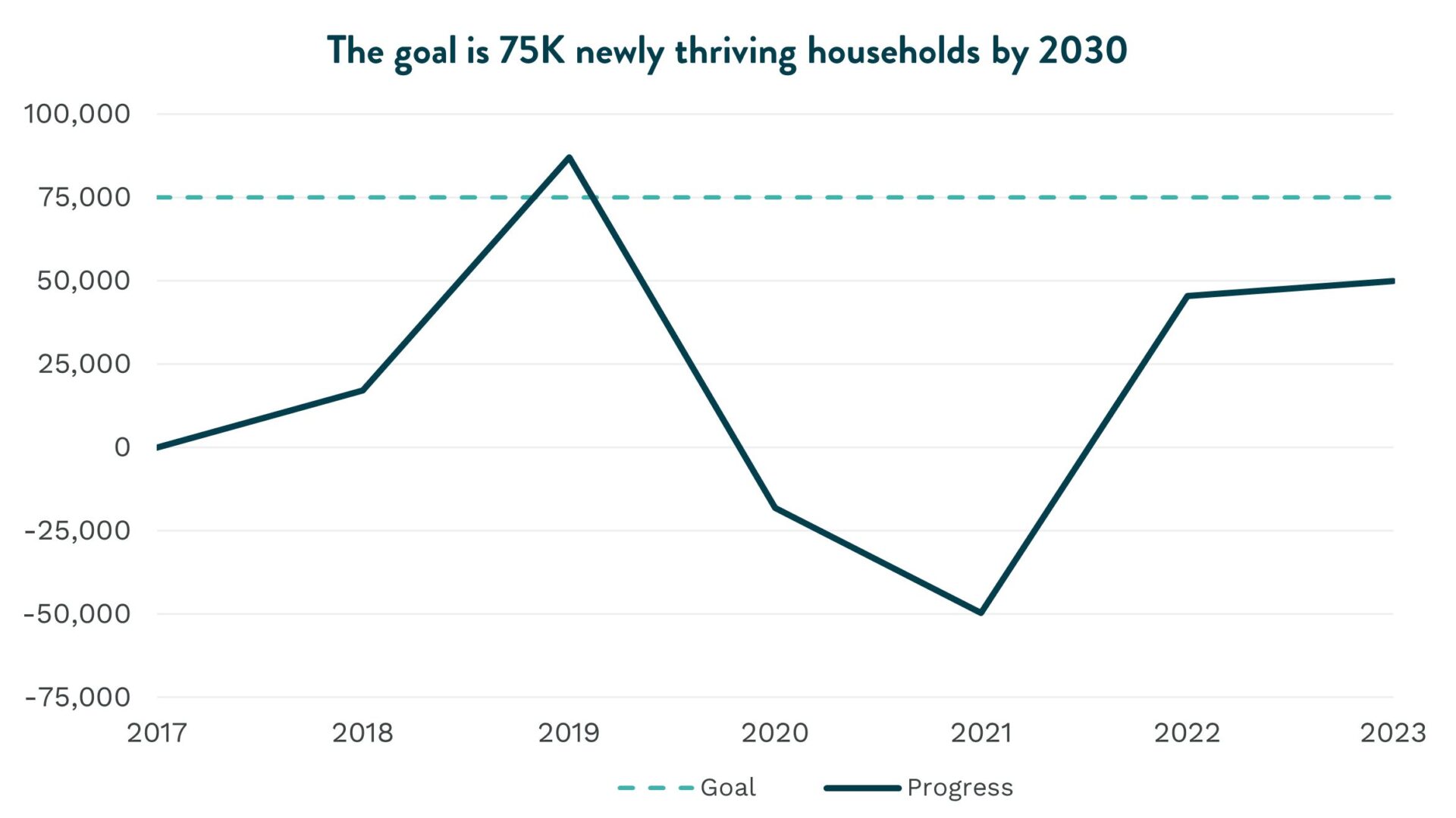
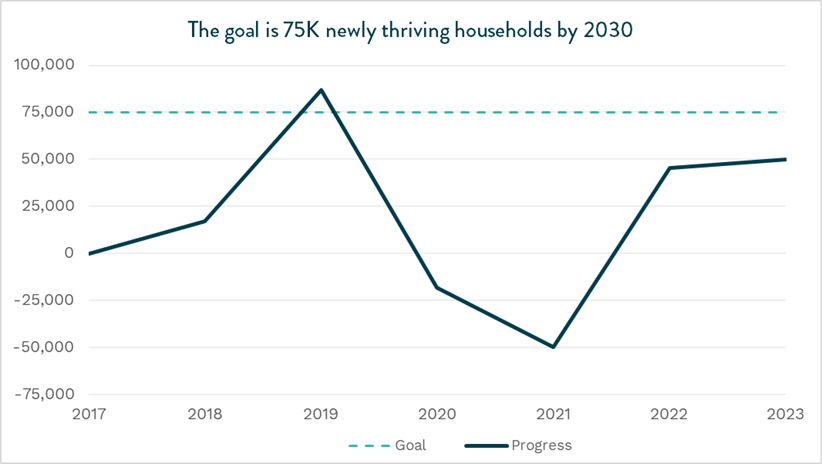
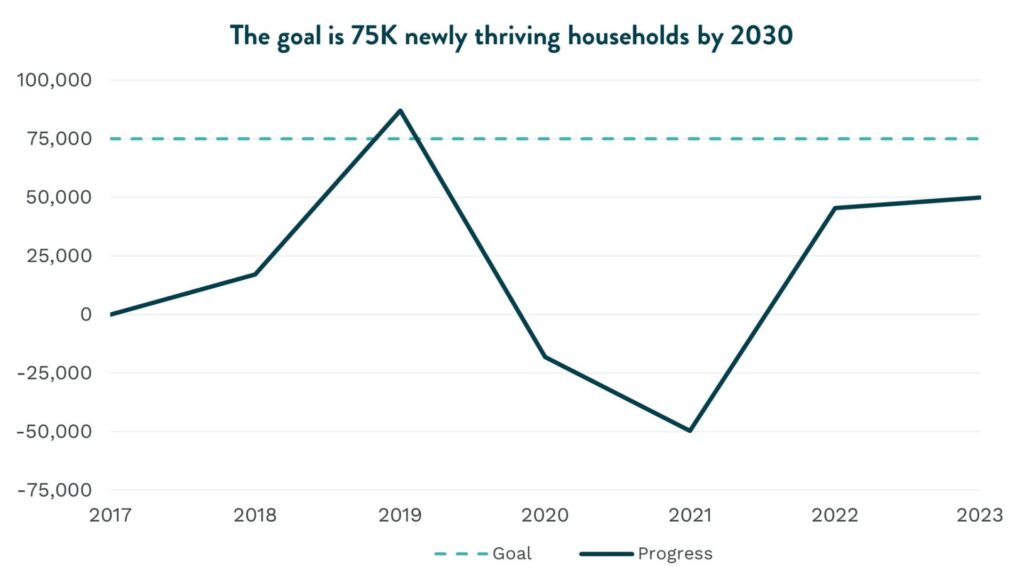
Decreasing affordability in San Diego threatens progress toward all the goals and disproportionately impacts communities of color. Household incomes have not kept pace with the cost-of-living reflected in basic household needs such as transportation, grocery expenditures, and childcare, leaving only one in 10 households able to afford the median-priced home in the region. As of 2023, San Diego has added 49,916 newly thriving households (chart below) bringing the total number of San Diego’s thriving households in the region to 610,983—51.7 percent of total households.

Read the latest Update


Meet SDSU’s Mission Valley Innovation District

San Diego State University (SDSU) is a top-tier public R1 institution that provides transformative educational experiences for more than 43,000 students in person and online, ranking among California’s leading public research universities. Building on this foundation, the SDSU Mission Valley Innovation District extends the university’s mission by fostering collaboration between academia and industry. The 1.6 million square-foot hub for office, technology, and research space creates new career pathways for students, drives regional economic growth, and advances innovative solutions to pressing societal challenges.

Promoting thriving student and faculty households

A significant challenge that SDSU faces in supporting thriving households is the rising home prices and rental costs which far outpace income growth—making it increasingly difficult for students, faculty, and staff to live near campus. For students, housing insecurity can affect academic success and well-being; for employees, it can hinder recruitment and retention, particularly among early-career professionals and those with families.

As SDSU expands through projects like SDSU Mission Valley, the university continues to explore partnerships, policy solutions, and innovative models that increase access to attainable housing while maintaining the quality and sustainability of the surrounding community. Maintaining affordability is a central focus so that students and employees can live and thrive where they learn and work—all essential to advancing SDSU’s mission of opportunity, equity, and regional impact.

Addressing affordability on multiple fronts

SDSU’s Mission Valley Innovation District is designed to advance economic opportunity and improve regional affordability through intentional planning and partnerships. Recognizing housing costs as a primary barrier to thriving households, SDSU Mission Valley will include more than 4,600 residential units, with 10 percent designated as affordable housing. The project’s transit-oriented design connects directly to the trolley, reducing transportation costs and improving access to employment and education. In addition, SDSU continues to explore partnerships that expand childcare options and support working families within the Innovation District.

Hear from SDSU:

SDSU and EDC have a shared commitment to advancing economic growth, regional talent development, and innovation. SDSU continues to invest in EDC, because EDC serves as a vital convener of regional stakeholders, bringing together leaders from government, education, and the private sector who also share common priorities and challenges. Through EDC’s programs, roundtables, and trade delegations, SDSU gains valuable connections and insights that strengthen collaboration across sectors. EDC’s data-informed approach supports evidence-based decision-making, helping partners align strategies to address regional needs in workforce development, housing, and economic growth. This collective effort directly advances SDSU’s mission of driving opportunity and innovation across the region.”

Join the movement

Progress on EDC’s 2030 Inclusive Growth goals is only achievable with and through the region’s employers scaling innovative and intentional solutions. Anchor institutions like SDG&E are helping to collectively pave the way toward a more inclusive regional economy. Join us:

To learn more and get involved in EDC’s work, contact:

Lauree Sahba
Lauree Sahba

Chief Operating Officer

Inclusive Growth Spotlight: SDG&E

EDC’s Inclusive Growth blog series highlights and celebrates local companies and organizations helping drive economic growth and progress toward San Diego’s 2030 Inclusive Growth goals.

Among the regional goals, EDC identifies increasing quality* small business jobs in San Diego as an economic imperative, with small businesses representing 99 percent of all firms in the region and accounting for 60 percent of total employment—outpacing the national average. Despite significant contributions, small businesses struggle to keep up in an increasingly expensive market.

Small, localized investments can drive quality job growth in small businesses

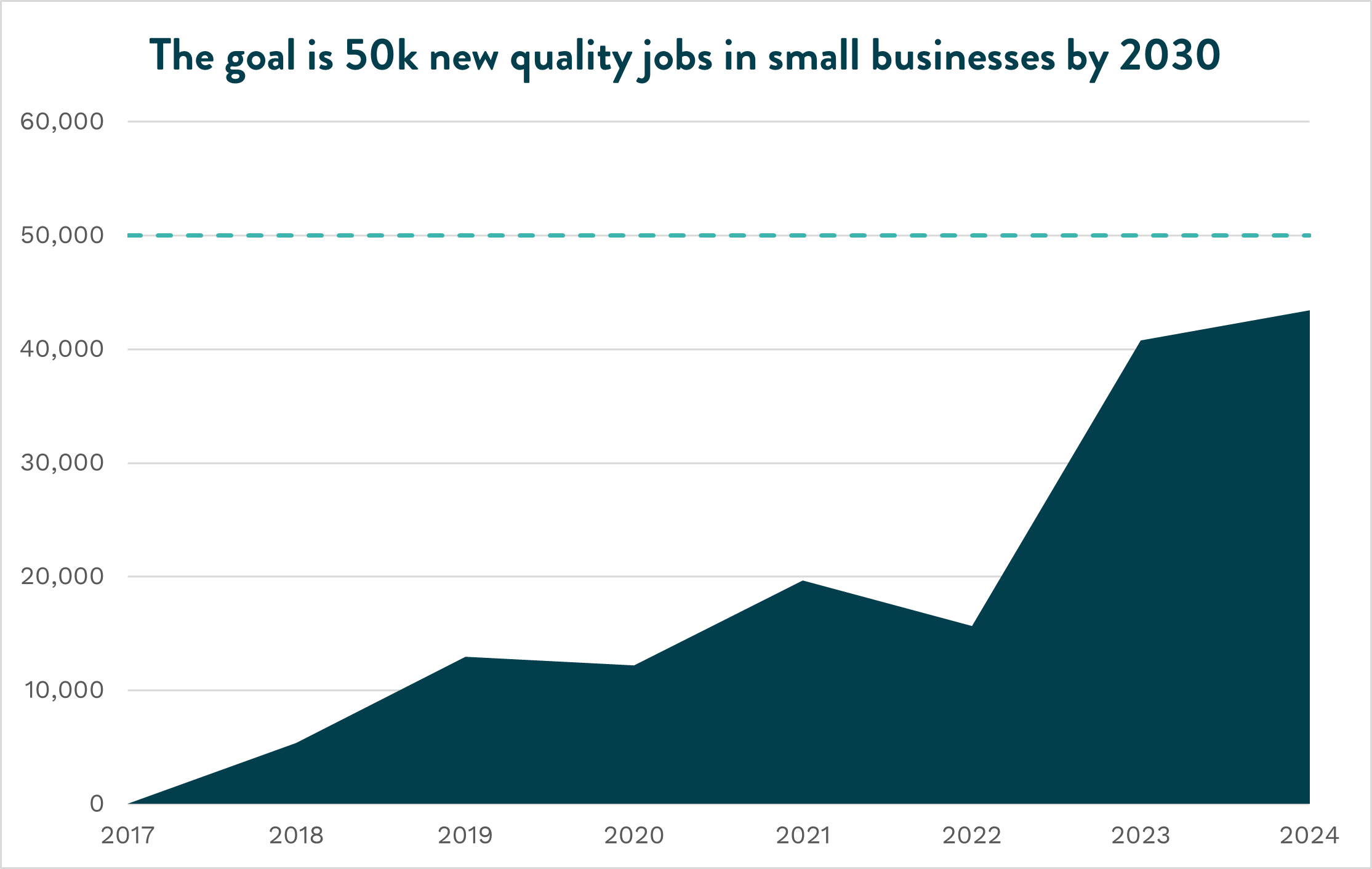
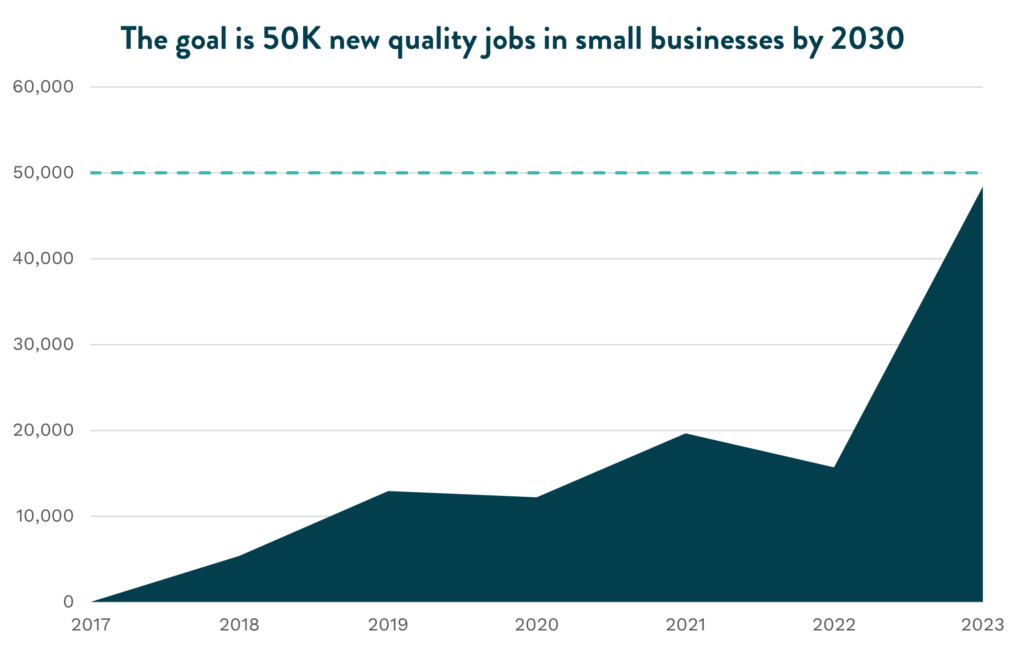
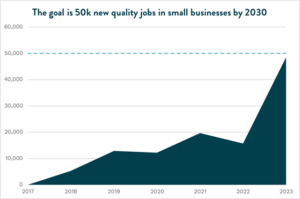
With a goal to add 50,000 new quality jobs in small businesses by the end of the decade, the latest data shows a surge in progress after years of steady recovery. In 2024, the region added 43,449 new quality small business jobs, marking an increase of about 3,000 jobs since 2023 and the closest we have ever been to reaching the goal.

While the significant rise in quality jobs is reassuring, employer-led efforts to support small businesses remain critical to the future of the region’s economy, and San Diego Gas & Electric (SDG&E) is among the local institutions contributing to the progress.

Read the latest Update

SDG&E’s commitment to supplier diversity in procurement spending

SDG&E has been proudly powering the regional economy for more than 140 years. The company was founded in 1881 to supply gas for streetlights when the City of San Diego had a population of just over 3,000. Today, SDG&E serves 3.7 million consumers spanning 25 communities in San Diego and southern Orange counties. As an anchor institution in the region, SDG&E is committed to delivering clean, safe, and reliable energy while fostering inclusive economic growth through its supply chain.

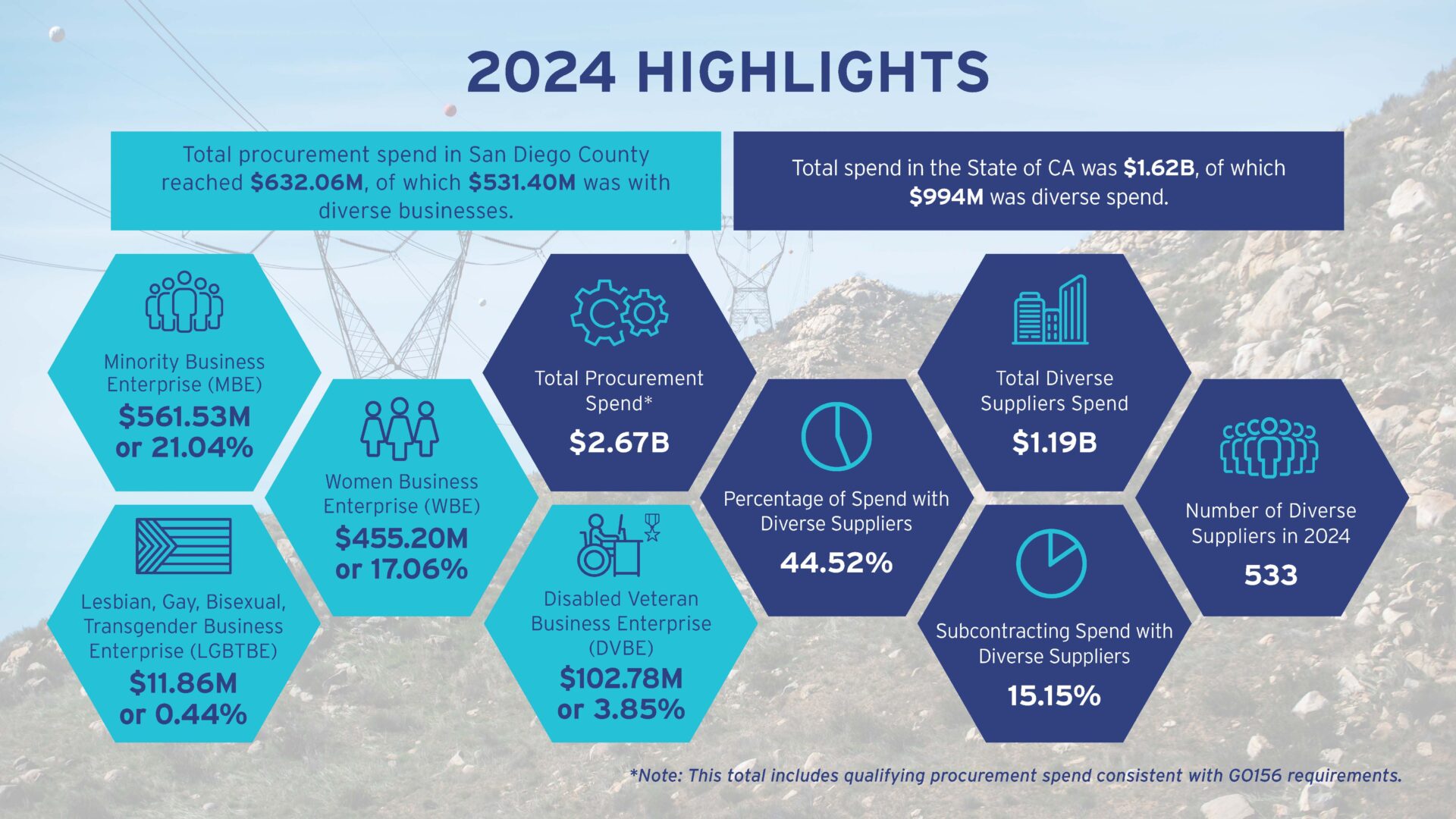
In 2024 alone, SDG&E had nearly $3 billion in procurement spending and billions more in economic impact, fueling local businesses, creating jobs, and strengthening the regional economy. Nearly 45 percent of the utility’s total procurement spend in 2024 was with diverse suppliers, including enterprises owned by minorities, women, veterans, people with disabilities, and LGBTQ individuals. Notably, $632 million of SDG&E’s spend in 2024 was in San Diego County.

Every year, SDG&E works with hundreds of suppliers of all sizes, with a wide range of offerings to meet the needs of its diverse customer base and achieve local and statewide goals for clean energy, safety, and reliability. SDG&E’s impact extends beyond energy infrastructure; its employees give back to the community through thousands of hours of volunteerism, and donations to local nonprofits to advance economic prosperity, STEM education, and other causes. Interested in doing business with SDG&E? Fill out the Supplier Interest Form here.

How SDG&E supports job creation and growth in the region

Recognizing that local, small, and/or diverse businesses face challenges in navigating procurement processes and requirements in the energy world—including prerequisites such as insurance and safety certifications—SDG&E has a dedicated responsible sourcing team to support suppliers through that process. The team focuses on supplier engagement and development, supply chain sustainability, and supplier risk management, with the goal of creating a more competitive, innovative, and resilient supply chain.

Supplier diversity from multiple lenses

Having a diverse set of local firms varying in size and location brings different ideas to the table, which helps mitigate risks associated with group think, supplier over-consolidation, and over-concentration. SDG&E’s responsible sourcing team has contacts in industries beyond energy—so even if the utility doesn’t need your good or service, the team may know someone else who does.

“As much as possible, we try to buy local to help create jobs and support our regional economy. Our team has long prioritized an inclusive and diverse supply chain, including spending more than $1 billion last year with certified diverse businesses,” said Dan Skopec, SDG&E Senior Vice President and Chief Regulatory Officer, and EDC Board Member. “Growing our local supplier base has also become more important because of global supply chain disruptions stemming from geopolitical events and tariffs.”

Direct outreach, programs, and local partnerships support small businesses

SDG&E conducts extensive outreach to local small and/or diverse suppliers and provides technical support, often on a one-on-one basis. The team also connects suppliers with resources provided by other partner organizations to develop and support suppliers, including the Small Business Development Center (housed at Southwestern College), The Veterans In Business (VIB) Network, Women’s Business Enterprise Council (WBEC)-West, Building, and DisabilityIN, to name a few. These organizations help address challenges such as insurance barriers, access to capital, and cybersecurity requirements.

As an active participant in the company’s competitive solicitations, the responsible sourcing team conducts research to identify qualified small and diverse suppliers for consideration by primes and SDG&E business units. The effort also makes procurement opportunities more accessible to smaller suppliers, working with project teams which break large projects into smaller segments to bid them out.

Outside of its responsible sourcing program, the utility also offers support to small businesses looking to electrify their fleet or seeking energy management coaching.

SDG&E small business support:

Continued investment in EDC is an investment in our community

SDG&E has been a supporter of EDC for the past 25 years. This long-standing collaboration is the result of a shared commitment to advancing economic prosperity and inclusive growth in the region. SDG&E supports EDC’s mission to mobilize business, government, and civic leaders around strategies that enhance San Diego’s global competitiveness and economic resilience. The utility proudly engages with EDC as an investor and member of the board of directors, and involves senior officers in various programs and initiatives, bringing SDG&E’s top talent to the table.

EDC’s standout programs/services for SDG&E include the Anchor Collaborative, Advancing San Diego, Community Explorer data tools, and the MetroConnect export accelerator, which provide critical infrastructure for regional growth.

Join the movement

Progress on EDC’s 2030 Inclusive Growth goals is only achievable with and through the region’s employers scaling innovative and intentional solutions. Anchor institutions like SDG&E are helping to collectively pave the way toward a more inclusive regional economy. Join us:

*A quality small business job is defined as one provided by a company with fewer than 100 employees and that pays at least $24.48 per hour and provides healthcare benefits.

To learn more and get involved in EDC’s work, contact:

Bree Burris
Bree Burris

Sr. Director, Communications & Community Engagement

Inclusive Growth Spotlight: Neighborhood House Association

To celebrate and inspire the efforts of regional employers, EDC’s Inclusive Growth blog series highlights San Diego companies and organizations helping to drive progress on the 2030 Inclusive Growth goals. Below we feature San Diego’s comprehensive human services provider Neighborhood House Association (NHA).

Launched in 2018 and informed by a partnership with the Brookings Institution, the Inclusive Growth initiative sets 2030 goals including increasing the number of thriving households locally, and making the business case for economic inclusion. Decreasing affordability in San Diego threatens progress toward all of the goals and disproportionately impacts communities of color. Household incomes have not kept pace with the cost-of-living, leaving only one in 10 households able to afford the median-priced home in the region. As of 2023, San Diego has added 49,916 newly thriving households (chart below) bringing the total number of San Diego’s thriving households in the region to 610,983.

Read the latest Update


Supporting households through a continuum of education and wellness

The Neighborhood House Association (NHA) was founded during the settlement house movement in 1914 to assist immigrants as they transitioned to living in the country.

NHA today

As a major employer and one of the largest nonprofit social services agencies in San Diego, NHA works through its Continuum of Care Model, a wrap-around service delivery model supporting households from prenatal to senior care. Its mission: To enrich lives through a continuum of education and wellness services, nurturing children and families from the earliest stages of life through adulthood, providing youth development and career exploration opportunities that allow them eventually to join the region’s workforce with a direct pipeline to workforce opportunities within NHA.

Challenges in grant-funded household support

Currently, NHA supports more than 5,000 community members by advocating for additional funding that addresses household affordability and accessibility challenges to realize dreams for as many households as possible. Because healthy and educated communities are where dreams become reality.

With federal and state grants, each program participant is assisted through a two-year enrollment period with direct support from an NHA family service worker outlining goals and needs, often including early childhood education programs and childcare services. Funds allow for more classrooms slots for children meaning that parents in households and members of the NHA workforce can go to work and school. With this, NHA sustains competitive pay with cost-of-living adjustments alongside annual merit increases to attract the best teaching and support staff for households.

Most of NHA’s programs are funded by federal and state grants, and as funding for programs like Head Start is challenged at the federal level, NHA continues to actively work with regional, state, and national leaders to ensure that program participants and employees are self-sufficient in supporting themselves and their families.

In addition to visiting state and national offices, NHA invites lawmakers to visit NHA to see programs at work in-person with the goal of increasing visibility and understanding of how the agency impacts the local economy. With an economic impact of more than $200 million each year, NHA operations are making a difference in the lives of team members, program participants, and the entire San Diego region.

As a large local nonprofit, NHA often highlights its value in San Diego’s economic development as a major local employer that allows pathways to education and workforce development. NHA President and CEO Rudy Johnson and have both served on the EDC Board of Directors and strongly believe in EDC’s work. NHA has found great value in joining EDC’s leadership trips and is a proud endorser of the Inclusive Growth initiative.

Join the movement

Progress on EDC’s 2030 Inclusive Growth goals is only achievable with and through the region’s employers scaling innovative and intentional solutions. Organizations like NHA are helping to collectively pave the way toward a more inclusive regional economy.

To learn more and get involved in EDC’s work, contact:

Bree Burris
Bree Burris

Sr. Director, Communications & Community Engagement

Inclusive Growth Spotlight: SBCS

To celebrate and inspire the efforts of regional employers, EDC’s new Inclusive Growth blog series will highlight San Diego companies and organizations helping to drive progress toward the 2030 Inclusive Growth goals. This blog features San Diego nonprofit service provider SBCS (formerly South Bay Community Services).

Launched in 2018 and informed by a partnership with the Brookings Institution, the Inclusive Growth initiative sets 2030 goals for San Diego related to increasing: 1) the supply of talent, 2) quality small business jobs, and 3) newly thriving households. The goals inform San Diego’s economic priorities and make the business case for economic inclusion.

Regional talent demand remains high

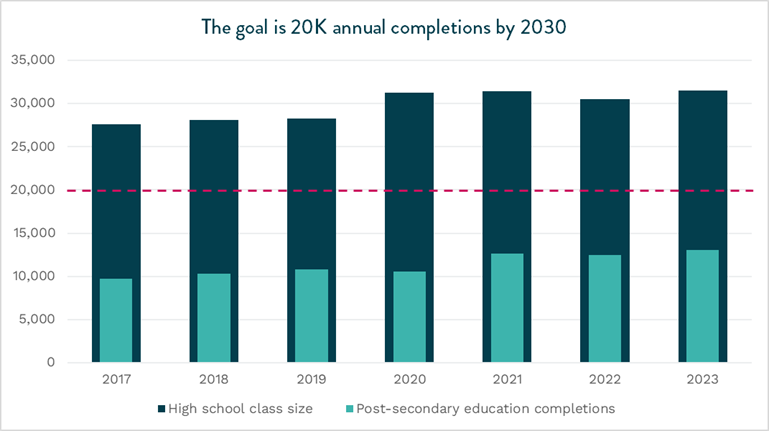
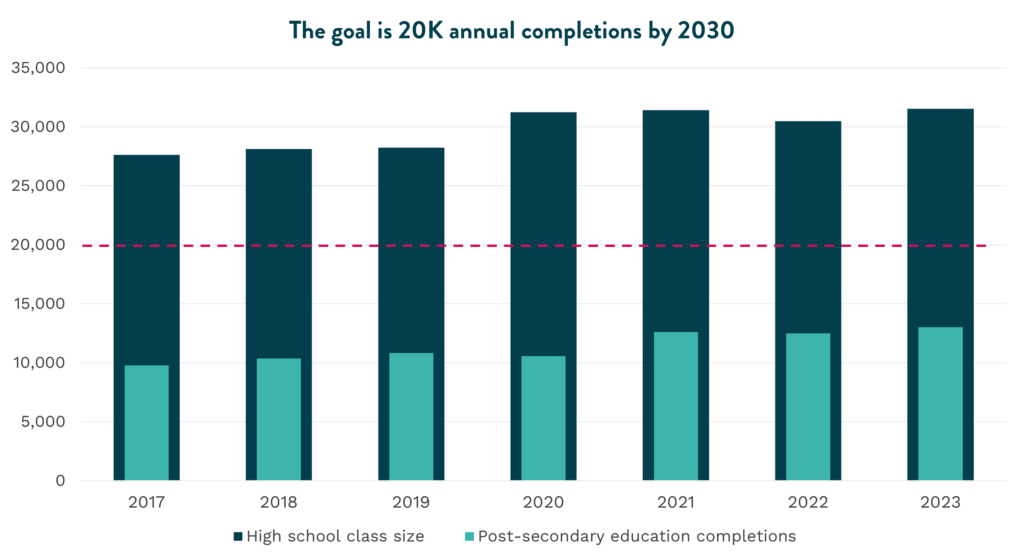
To maintain economic competitiveness, the region needs 20,000 students per year completing post-secondary education within six years of graduating high school. These include certifications, career technical education, and college degrees. Progress toward the goal has increased incrementally since 2017 yet completions have shown signs of tapering; the region still falls short of the goal; and the local supply of talent continues to be a critical priority for San Diego employers.

Talent scarcity has become the new normal as hiring demand exceeds the supply of talent across industries. Compounding this challenge, student success is demographically uneven in the San Diego region. Despite making up 35 percent of the population, Hispanics and Latinos only account for 17 percent of residents over 25 years old with at least a bachelor’s degree. Critical to growing the local talent pool will be creating more opportunities for Black and Latino students to succeed locally. Employer-led talent pipeline development efforts are critical to the future of San Diego’s economy and SBCS is among those working toward a solution.

Read the latest Update


When families thrive, San Diego County thrives

SBCS transforms communities to support the well-being and prosperity of children, youth, and families throughout San Diego County.

Recognized as a trusted leader in the region for more than 50 years, SBCS takes on San Diego’s toughest challenges with unwavering commitment to create lasting sustainable change. SBCS reaches more than 50,000 residents each year with widescale high-impact services proven to reduce homelessness, improve educational outcomes, advance economic mobility, and improve community safety.

SBCS College-Bound Youth

Understanding the opportunity gap

For young people from low-income communities, a lack of access to quality education, professional mentors, and financial resources will often lead to limited career opportunities in adulthood. Minimum wage jobs are often the only ones available—and can leave youth unable to cover the cost of even their most basic needs, especially in a high-cost region.

SBCS is closing the opportunity gap by paying youth a living wage while they gain hands-on experience in industries that foster long-term career growth and financial success.

For those ready to enter the workforce, paid technical training with local companies and industry-recognized certifications pave the way for stable, well-paying careers. After completing six-weeks of training with SBCS youth Pedro was hired as a full-time fiber optics technician at a competitive salary.

“Pedro wants to be here—he’s learning, he’s growing. Big picture, where he’s going to be in five or 10 years…it’s going be awesome for him to look back on where he started.”  —Justin Baldwin, Director of Construction, Wyyred

For college-bound youth, paid professional internships provide vital income while students continue their education and support their families. After transferring from Southwestern College to UCLA, Jamie worked with SBCS to secure a paid summer internship with the San Diego County Board of Supervisors, gaining hands-on experience in government affairs and policymaking.

“SBCS [helped] catapult my career—they saw something in me and gave me opportunities I didn’t think were possible. Now I’m working next door to City Hall every day, pursuing my passion for public policy.”—Jamie, SBCS Internship Graduate

SBCS provided more than 200 youth with employment support in 2024—and the demand for meaningful work experience is currently exceeding the agency’s capacity to place youth. SBCS is actively seeking local businesses to host interns with wages paid by SBCS. Contact impact@csbcs.org for more information or to get involved.

SBCS Internship student

SBCS’ leadership team shared that an Investment in EDC is an investment in regional workforce development.

“SBCS’ longtime partnership with San Diego Regional EDC has directly strengthened our impact.

Through EDC, SBCS has built meaningful connections with professionals across the region—resulting in new advisory partnerships, internship placements, funding opportunities, and community collaborations. When SBCS launched its internship program, EDC’s research and leadership in workforce development played a critical role in helping us secure grants and design a model grounded in real regional needs. SBCS is proud to be part of a network that champions inclusive economic growth, and we look forward to deepening our relationship in the years ahead.”

Join the movement

Progress on EDC’s 2030 Inclusive Growth goals is only achievable with and through the region’s employers scaling innovative and intentional solutions. Organizations like SBCS are helping to collectively pave the way toward a more inclusive regional economy.

To learn more and get involved in EDC’s work, contact:

Bree Burris
Bree Burris

Sr. Director, Communications & Community Engagement

EDC report: Annual Inclusive Growth Progress

Report: Gaps in accessibility challenge the region’s goals

Today, San Diego Regional EDC released its Inclusive Growth Progress Report, using the most up to date and available data (2023). With new progress and bold objectives set around increasing the number of quality jobs, skilled talent, and thriving households critical to the region’s competitiveness, the report measures San Diego’s growth and future outlook, and spotlights the greatest threats to prosperity

progress.incLUSIVesd.org

Making the business case for inclusion, EDC releases this annual report to track progress toward the region’s 2030 goals: 50,000 new quality jobs* in small businesses; 20,000 skilled workers per year; and 75,000 newly thriving households**.

Since its launch in 2017, the initiative has rallied public commitments from County, City, academic, and private sector leaders who are leveraging the Inclusive Growth framework to inform their priorities, tactics, and resource allocation. While much about the economy remains uncertain and inclusion is challenged at the national level, intentional and consistent efforts by a diverse set of regional stakeholders will be key to achieving these goals.

THE STORY BEHIND THE DATA

Halfway through the decade, the San Diego region continues to make progress towards its 2030 goals with increases in quality jobs, post-secondary education completions, and median household incomes in communities of color. Nevertheless, gaps in accessibility continue to challenge the region’s competitiveness.

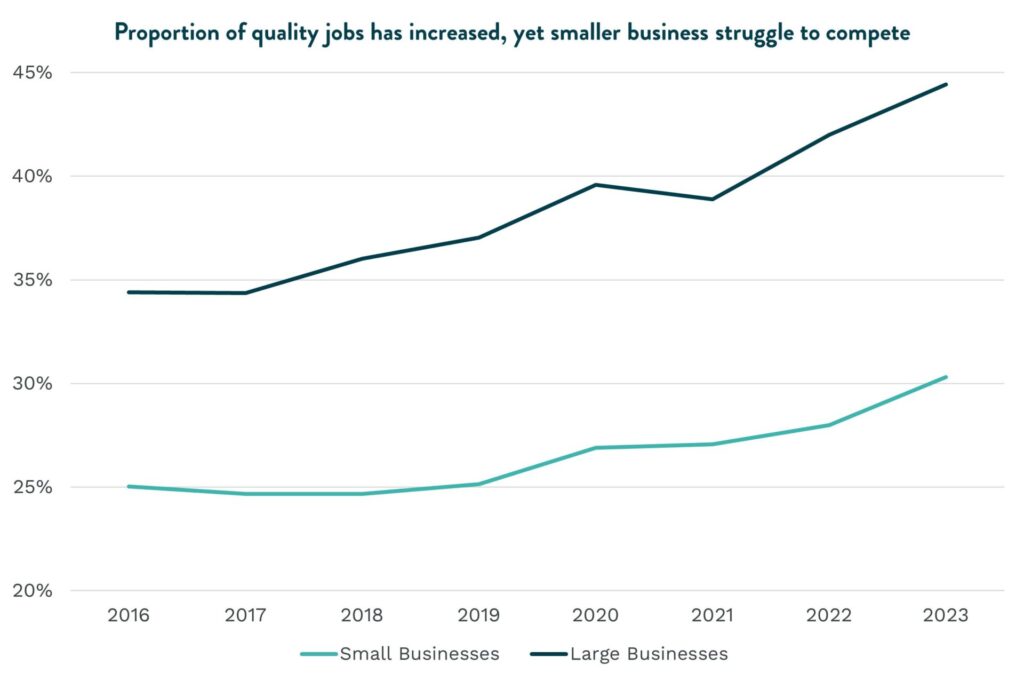
In terms of quality jobs, San Diego has made immense progress towards the 2030 goal and is even projected to exceed it. However, while quality job numbers have increased, small businesses are struggling with a stagnant pace in job growth, talent acquisition, and staff retention. These challenges further the gap between small and large businesses and threaten small businesses’ ability to compete.

With many small businesses considering leaving the region due to funding and staffing challenges, it is vital that these firms have access to new markets. San Diego anchor institutions can make an immense impact by shifting just one percent of existing procurement spend to small, local, and diverse businesses.

San Diego’s innovation economy has positioned the region as a global hub for breakthrough scientific research and life-changing technological advancements. Yet, our talent shortage poses a threat to San Diego’s competitiveness and talent goal. A key issue continues to be accessibility for low-income students who make up the workforce of tomorrow but are underrepresented in today’s workforce. While Hispanic and Latino students make up almost half of San Diego’s K-12 students, only 20 percent are currently represented in the innovation economy workforce.

Furthermore, less than 40 percent of Black and Latino students from the graduating class of 2023 were considered college-ready upon graduation, which translates into less students opting into post-secondary education. This lack of preparation, coupled with the increasing requirement of a bachelor’s degree for entry level jobs, is exacerbating the talent crisis in the innovation economy. If San Diego is going to meet workforce needs and the talent goal by 2030, greater efforts must be made to enable access and opportunity for local, young, and diverse students.

With rising housing, transportation, and grocery costs, San Diego remains one of the most expensive metros in the country. While median household incomes have seen significant growth—especially in Black and Latino households—they still struggle to keep pace with rising costs. There is also a racial disparity in San Diego’s ratio of housing wealth to population share. For example, Latino households represent 27.4 percent of the population but hold only 17 percent of the region’s housing wealth.

While not at pre-pandemic numbers yet, San Diego has added 49,916 newly thriving households as of 2023, notable progress in the face of increasing affordability pressure. In order to sustain progress, housing options must be made available at more affordable price points, and housing permit activity needs to be accelerated to meet regional goals—especially for affordable and middle-income units.

Join the movement

Learn more and get involved with EDC:

Read the full report here, and all previous updates at progress.inclusiveSD.org

The initiative is sponsored by Bank of America, Burnham Center for Community Advancement, County of San Diego, JPMorgan Chase & Co., Prebys Foundation, SDG&E, Southwest Airlines, and TOOTRiS.

more at inclusiveSD.org

*Quality job = $23.88 per hour wage + healthcare benefits.

**Thriving household = total income covers cost of living for renter- or owner-occupied households, at $77K and $124K respectively.

Inclusive Growth Spotlight: Commute with Enterprise

To celebrate and inspire the efforts of regional employers, EDC’s Inclusive Growth blog series highlights San Diego companies helping to drive progress on the 2030 Inclusive Growth goals. Below we feature the nationally recognized commuter vanpool service operated by Commute with Enterprise.

Launched in 2018 and informed by a partnership with the Brookings Institution, the Inclusive Growth initiative sets 2030 goals for San Diego related to increasing: 1) the supply of talent, 2) quality small business jobs, and 3) newly thriving households. The goals inform San Diego’s economic priorities and make the business case for economic inclusion.

Decreasing affordability in San Diego has threatened progress toward newly thriving households. Increasing cost pressures disproportionately impact communities of color who historically do not have the same rate of homeownership, a key driver of upward economic mobility. By the end of the decade, EDC estimated the region would need to add 75,000 newly thriving households. As of 2023, San Diego has added 49,916 newly thriving households bringing the total number of San Diego’s thriving households in the region to 610,983.

Commute with Enterprise supports companies and households

Commute with Enterprise operates the nation’s largest vanpool service and provides affordable commuting solutions, which contribute to EDC’s 2030 thriving households goal by reducing travel costs for workers.

Commute with Enterprise established its first vanpool in San Diego 25 years ago, which still operates today and has since served numerous local employers across industries including healthcare, manufacturing, tech and biotech startups, universities, and more.

In San Diego, 20-30 percent of the population commutes more than 60 miles each day. Annually, households in San Diego spend more than $13,000 on transportation costs, representing a 73 percent increase since EDC began tracking progress toward the 2030 goals. As housing costs have increased, households have opted to move to more affordable areas, often further away from their jobs creating longer work commutes.

Companies like Dr. Bronner’s have leveraged Commute with Enterprise to launch a pilot program to support its workforce as well as contribute to a more sustainable future. In addition, SANDAG supports employers and employees through its vanpool program which offers subsidies to offset vehicle lease costs.

Benefits for Dr. Bronner’s:

  • Employees pay $50 per month, compared to $285 for solo commuting (IRS, 2024).
  • Emergency ride credit of $500 per car provided by SANDAG covers three emergency rides home per year, per participant.
  • One vehicle with five employees commuting an average of 25 miles round trip reduces CO2 emissions by more than 10 metric tons per year compared to individual driving.
  • Program aims to save 25 parking spaces at Dr. Bronner’s site with future growth.

Commute with Enterprise gives employers a competitive edge when it comes to talent attraction and retention. Riders could save $10,000 per year on average by reducing costs associated with fuel, vehicle maintenance, and more.** Vanpooling can also help reduce traffic congestion as Commute with Enterprise takes more than 45,000 single-occupancy vehicles off the road each day.*** This smart, practical, and employer-led commuting solution helps alleviate rising costs and ultimately supports households.

Join the movement

Progress on EDC’s 2030 Inclusive Growth goals is only achievable with and through the region’s employers who must be committed to scaling innovative and intentional solutions in San Diego. Companies like Cultura are helping to collectively pave the way toward a more inclusive regional economy. Join us:

To get involved in EDC’s work, contact:

Bree Burris
Bree Burris

Sr. Director, Communications & Community Engagement


* A thriving renter-occupied household, as defined by EDC, needs at least $77,280 in household income per year while homeowner-occupied households need $124,368 per year to be considered thriving.
** Estimates based on 2024 Commute with Enterprise reporting, an average 5-day/ week commute and 2024 AAA costs associated with operating a vehicle including fuel, maintenance, and depreciation. CommutewithEnterprise.com/Showmethemath. 
*** Estimates based on 2024 Commute with Enterprise reporting. Assuming participants previously drove alone. CommutewithEnterprise.com/Showmethemath.

Inclusive Growth Spotlight: Cultura

To celebrate and inspire the efforts of regional employers, EDC’s Inclusive Growth blog series highlights San Diego companies helping to drive progress on the 2030 Inclusive Growth goals.

Launched in 2018 and informed by a partnership with the Brookings Institution, the Inclusive Growth initiative sets 2030 goals for San Diego related to increasing: 1) the supply of talent, 2) quality small business jobs, and 3) newly thriving households. The goals inform San Diego’s economic priorities and make the business case for economic inclusion.

Small businesses are the backbone of the economy

San Diego small businesses represent 98 percent of all firms and account for 59 percent of total employment, outpacing the national average. In 2023, San Diego County ranked third for most new business formations in California. Despite significant contributions, small businesses struggle to keep up in an increasingly expensive market.

With a goal to add 50,000 new quality jobs in small businesses by the end of the decade, EDC data shows a surge in progress after years of steady recovery. In 2023, the region added 48,481 new quality* small business jobs, nearly surpassing the goal.

While the significant rise in quality jobs is reassuring, small businesses still struggle to compete. Employer-led efforts to support small businesses and increase the number of quality jobs are critical to the future of the region’s economy, and Cultura is among the local companies contributing to the progress.

How Cultura is moving the needle

Cultura is a San Diego small business specialized in a broad range of furniture solutions tailored to fit the needs of its clients. Since 2009, Cultura has partnered with more than 1,250 companies to build spaces that support their businesses, people, and ultimately culture. Whether it’s designing inviting lobbies, creating flexible workspaces, or setting up collaborative meeting rooms, Cultura excels at transforming environments that foster both productivity and well-being.

As a diverse, women-led company, Cultura plays a critical role in the region’s economic ecosystem. By providing tailored solutions for office environments, Cultura directly supports the infrastructure needs of San Diego companies while also adding to the region’s number quality jobs. Cultura also prioritizes small, local businesses in its internal vendor selection process, further strengthening the local economy.

When local firms choose to work with local vendors, they are not only fulfilling their needs but also investing back into the regional economy. This practice helps keep procurement dollars circulating locally, promoting quality jobs and fostering a more resilient local economy. In fact, EDC has found that if local anchors shifted just one percent of existing spend to local, small, or diverse suppliers, San Diego would see millions of dollars in economic impact and thousands of jobs.

The synergy between large anchor institutions, smaller businesses, and local vendors like Cultura creates a powerful multiplier effect that fuels job growth, drives innovation, and sustains a thriving economy.

Cultura’s mission to create the best work environments begins internally. Offering flexibility in the work schedule, competitive salaries, matching retirement contributions, annual bonuses, and a unique work environment, the company demonstrates how small businesses can contribute to Inclusive Growth progress.

Join the movement

Progress on EDC’s 2030 Inclusive Growth goals is only achievable with and through the region’s employers who must be committed to scaling innovative and intentional solutions in San Diego. Companies like Cultura are helping to collectively pave the way toward a more inclusive regional economy. Join us:

*A quality small business job is defined as one provided by a company with fewer than 100 employees and that pays at least $23 per hour and provides healthcare benefits.

To get involved in EDC’s work, contact:

Bree Burris
Bree Burris

Sr. Director, Communications & Community Engagement

Inclusive Growth Spotlight: San Diego County Regional Airport Authority

To celebrate and inspire the efforts of regional employers, EDC’s new Inclusive Growth blog series will highlight San Diego companies helping to drive progress on the 2030 Inclusive Growth goals.

Launched in 2018 and informed by a partnership with the Brookings Institution, the Inclusive Growth initiative sets 2030 goals for San Diego related to increasing: 1) the supply of talent, 2) quality small business jobs, and 3) newly thriving households. The goals inform San Diego’s economic priorities and make the business case for economic inclusion.

Small businesses are the backbone of the economy

San Diego small businesses represent 98 percent of all firms and account for 59 percent of total employment, more than the national average. The impact that small business owners have on local jobs cannot be overstated, and yet, they struggle to keep up in an increasingly expensive market.

With a goal to add 50,000 new quality jobs in small businesses by the end of the decade, EDC data shows a surge in progress after years of steady recovery. In 2023, the region added 48,481 new quality* small business jobs, nearly surpassing the goal.

While the significant rise in quality jobs is reassuring, small businesses still struggle to compete. Employer-led efforts to support small businesses are critical to the future of the region’s economy, and the San Diego County Regional Airport Authority is among those contributing to the progress.

How SAN supports the ecosystem

As a regional anchor institution that generates more than $12 billion dollars in economic activity each year, the San Diego County Regional Airport Authority is a pillar of the economy. This fall will mark the completion of the first phase of the much-anticipated Terminal 1 at San Diego International Airport. The project will continue to generate economic opportunity for San Diego, primarily through jobs and contracting opportunities—key components of Inclusive Growth.

Learning to do business with the Airport can be difficult to navigate for small, local businesses. The Airport Authority’s Small Business Development (SBD) Program is the primary business unit responsible for opening the doors to smaller businesses so that they can compete for airport contracts.

The Airport Authority’s Procurement Department also maintains an outreach plan and tracks supplier diversity metrics for all solicitations. In collaboration with department contract owners, Procurement develops solicitations and facilitates the review, evaluation, selection, and onboarding of respondents. To engage local, small, and Veteran-owned businesses, the Airport Authority implements a variety of outreach strategies designed to ensure these businesses are informed of contracting opportunities and can be competitive when bidding on Airport projects.

Both SBD and Procurement, in partnership with all Airport Authority departments, encourage diversity in the Airport’s suppliers, professional services, contractors, and concessionaires.

The Airport Authority’s annual “Meet the Primes” event is open to the public and connects small businesses directly with prime contractors, airport staff, and other government agencies to learn how to navigate the contracting process. In addition, the Authority hosts various training and educational events throughout the year, covering how to work with the Airport and become certified for contracting opportunities.

“We also try to see if there are opportunities to unbundle projects to make certain aspects of the project smaller, so more businesses have the ability to compete,” said Craig Ruiz, Manager of the Airport Authority’s SBD Program. “We do targeted outreach to businesses in those different categories to ensure they are prepared to bid.”

On a project-specific level, the Procurement team proactively identifies businesses that can meet the needs of each project, ensuring all relevant vendors are informed and engaged through targeted outreach. The Procurement Department leverages platforms like PlanetBids, an e-procurement tool where businesses can register, access contracting opportunities, and connect with prime contractors for subcontracting opportunities, helping to broaden their reach and increase their chances of success. Small businesses are invited to signup for PlanetBids to access trainings and more information.

Small shifts in local spend by San Diego’s anchor institutions create quality jobs. EDC found that a one percent increase in local construction spending could generate more than 1,000 new quality jobs for the region.

“Supplier diversity provides a greater range of solutions to projects, and helps our community flourish,” said Airport Authority Director of Procurement Jana Vargas. “Investing in these businesses creates a ripple effect that allows them to reinvest in their communities, creating a cycle of opportunities.”

The Airport Authority’s efforts continue to show results. For 2023, there was a 21 percent year-over-year growth in major construction project spending to Local Business Certified (LBC) firms, with more than $32 million awarded to LBCs.

Businesses in the Small Business Enterprise (SBE) category were awarded contracts representing almost $28 million in 2023. The federally funded Quieter Home Program awarded $1.4 million to Small Business Enterprises (SBE).

Join the movement

Progress on EDC’s 2030 Inclusive Growth goals is only achievable with and through the region’s employers who must be committed to scaling innovative and intentional solutions in San Diego. Anchors like San Diego County Regional Airport Authority are helping to collectively pave the way toward a more inclusive regional economy.

*A quality small business job is defined as one provided by a company with fewer than 100 employees and that pays at least $23 per hour and provides healthcare benefits.

To learn more and get involved in EDC’s work, contact:

Bree Burris
Bree Burris

Sr. Director, Communications & Community Engagement