We hope you were able to tune into our October 1 event featuring speakers from McKinsey & Co. discussing global supply chain risks and how supply chain professionals can ensure their businesses are resilient. Thank you to CMTC, Solar Turbines, and Walmart for sponsoring this event.
The following federally funded opportunities are available through CMTC to manufacturers in California. To learn more about how you can take advantage of these opportunities, contact San Diego regional manager, David Moates.
“Up to $4.6T in trade flows could shift to different countries over the next 5 years as companies rethink supply chains” —@McKinsey#MadeinSD#MFGday2020 cc: @WTCSanDiego
The Advancing San Diego (ASD) Internship Program launched this Spring in a remote-capacity amid the COVID-19 pandemic and aims to provide up to 100 San Diego-based companies with fully subsidized interns. This program targets companies with 100 employees or less, which comprise 98 percent of all businesses in San Diego, employ nearly two thirds of San Diegans, and account for 70 percent of job growth. A key issue for these companies has been a lack of time and resources to recruit the skilled talent necessary to continue their growth.
As students close out their Summer internship experiences, EDC has launched this blog series to highlight the innovative local companies that comprise the first cohort of the program, and the interns they hosted.
In this feature, we sat down with Jaden Risner, CEO and Co-Founder at Family Proud. A part of the inaugural cohort of host companies, Family Proud is a San Diego-based, Veteran-owned and operated company that provides a care management platform which connects patients and families to a community and resources critical to their care, in a time of need.
The platform is secure and easy-to-use, and allows families to communicate to their support network, receive support through our care registry, and communicate with others in similar situations through our peer network. Family Proud provides a foundation for families to receive support and love, and enhance care for their loved one.
Why was your company founded?
Family Proud started from a place of love. Our mission has always been to ensure no family need goes unmet and that’s why every day we strive to help as many people as possible with all the love we have to give.
Family Proud is inspired by both co-founders’ personal experiences. I spent 12 years of active duty with the Navy as a helicopter pilot. On one of my deployments, my mother had a heart attack and I was confronted with the struggles of remote care. Several deployments later, my father was diagnosed with cancer. I ended up becoming my mother’s informal caretaker and have personally experienced the burdens of care.
My co-founder Clay was a USMC staff sergeant and was diagnosed with cancer in April 2008. Four months later, after undergoing chemotherapy, Clay’s cancer went into remission. But when his cancer came back a year later, and he was given six months to live, the 13-year Marine Corps veteran set a new goal, the Iron Man. A clinical trial at UC San Diego is ultimately what saved his life, and he went on to compete in the Ironman World Championship triathlon in Hawaii in 2010 shortly after his terminal cancer discharge. Clay committed himself back to patient care, became a patient advocate, and went back to school. Clay is now a healthcare executive and Family Proud’s Chief Strategy Officer.
Tell us about your experience building a small business/startup in San Diego. What resources, services, and/or organizations were most valuable for supporting your Family Proud’s growth?
San Diego has a great startup ecosystem. From academia to events and coworking spaces, Family Proud has been fortunate to lean on the community to support our early growth. The ASD Internship Program is an example of the collaborative support available in San Diego—working together to support innovation, development, and growth for the greater San Diego economy.
Has your company pivoted as a result of COVID-19?
Although our initial market focus was on the pediatric cancer and Veteran communities within the San Diego region, COVID-19 has opened our service aperture to a far greater audience in need. For example, to broaden our impact, we rolled out our “Digital Care Kit” program—a custom PDF e-package consisting of care registry credit, relevant resources, products, services, lessons learned, and peer connections based on the recipient’s location and adversity. Family Proud vets families in need and connects them with a care kit, which has been sponsored by a generous donor. To request or sponsor a Family Proud Digital Care Kit, please visit our website.
Tell us a little bit about your interns and the value they bring.
As a small business in San Diego, we’ve been fortunate to receive consistent news/opportunities from the City and EDC newsletters. The timing of the launch of the ASD Internship Program happened to coincide with our product development schedule. Our software developer intern, Shaeli, was an amazing addition to the technology team. She brought a fresh, outside-the-box perspective, was resilient and flexible to the new virtual/remote collaborative environment, and always approached her weekly tech sprint challenges with a positive and determined attitude. Family Proud was very lucky to have Shaeli onboard with us this Summer!
As I take on the role of board chair for the next two years at San Diego Regional EDC, I am fortunate, blessed, and humbled by the opportunities that life has given me. I also recognize that my story is not the norm for Latino immigrants in this country and that my journey thus far is not particularly common for a city kid from Chicago. I feel both an obligation and responsibility to use this time at EDC wisely, effectively, and purposefully. And as the threats and realities of COVID-19 and racial injustice continue to grip our community and our economy, like many, I feel the urgency and the need to accelerate the recovery that lies in front of us. From the years following the Great Depression to those following the Great Recession, every recovery that the American economy has experienced has increased systemic poverty and widened the inequalities in Latino and African American communities. Too often, in a rush to restore economic normalcy for some, entire segments of our communities have been left further behind and unable to find and maintain their footing on a new and changing economic foundation. Our commitment at EDC is to do everything we can—drawing on the breadth and depth of every partnership and relationship we have— to get this recovery right. Read more.
Over the last several months, the economic development team has kept a close pulse on the businesses that make up our regional economy – and EDC’s economic development committee has always pivoted to support, by addressing current challenges and changes to our economy.
Where every recovery before this one has widened inequality, EDC is committed to making sure we get this recovery right. During this pivotal moment, through the perspectives of a variety of businesses and stakeholders, the committee is focused on highlighting economic development solutions and charting the path to an inclusive resilient recovery. As we collectively turn to rebuilding our economy, it has never been more important to do so thoughtfully and holistically, with equity as a lens and skilled workers, quality jobs, and thriving households as the core building blocks.
This past September, the committee discussed emerging trends in commercial real estate and the redevelopment of the Midway District.
The Good, The Bad, and The Uncertain
Our discussion began with an informative commercial real estate market update presented by Tom Turner, vice president at CBRE. Tom highlighted emerging industry trends across the San Diego market focusing on potential growth, and concentration of key employees.
Tom noted that major key tenants that are continuing to hire based on advancements of new technologies specifically related to 5G and artificial intelligence, and that tech companies are continuing to support our local industry growth. Also contributing to the potential for regional economic growth are major redevelopment projects underway, specifically around NAVWAR and the Midway District Community Plan.
Opportunities in San Diego’s Midway District
With the timely announcement surrounding the City of San Diego’s selection of the winning development bid for the Sports Arena and Midway district, the committee hosted a panel discussion with regional leaders on future plans for the community and what it will mean for transit, housing and job opportunities.
Dike Anyiwo moderated this discussion. A policy adviser at the San Diego Regional Chamber of Commerce & vice chair of the Midway Pacific Highway Community Planning Group, Anyiwo focused on equitable development for small businesses and how to align the community with future development plans.
Zach Adams, vice president of development at Brookfield Properties, presented on his company’s winning bid and the vision to establish new parks, bring new opportunities for businesses, and offer affordable housing in San Diego’s Midway District.
NAVWAR Executive Director John Pope emphasized the importance of the Navy Old Town Campus Revitalization Project to NAVWAR’s high-tech mission and rapidly growing cyber and information warfare requirements. For NAVWAR, this would be a transformative opportunity to retain thousands of mission-driven tech jobs in the region.
Finally, Hasan Ikhrata, executive director at SANDAG, provided additional details on regional transit development and future goals in the Midway community to greater align opportunities for talent access in San Diego.
Every week, ‘Good News of the Week’ features a curation of positive headlines from San Diego, delivered straight to your inbox. A blend of aggregated stories from San Diego’s most trusted news sources and original EDC-created content, GNOTW provides a comprehensive recap of the region’s best stories from the past week.
For the week of September 25, 2020, here’s what we’re reading:
Every economic recovery the U.S. has experienced has increased systemic poverty & widened inequalities in Black & Latino communities. This time, we’re committed to getting the recovery right. Learn more from EDC board chair Julian Parra. Read More.
San Diego Science & the Global Pandemic
In August, EDC’s San Diego: Life. Changing. wrapped up a series of virtual events highlighting the innovation economy and spirit of collaboration that exist in San Diego. If you weren’t able to tune in, you can catch the recap on our blog.Read More.
San Diego business resources:
Amidst everything happening in the world, we need a reminder that there’s plenty of ‘Good News’ to go around in San Diego. We have also compiled additional resources for businesses and individuals seeking additional guidance.
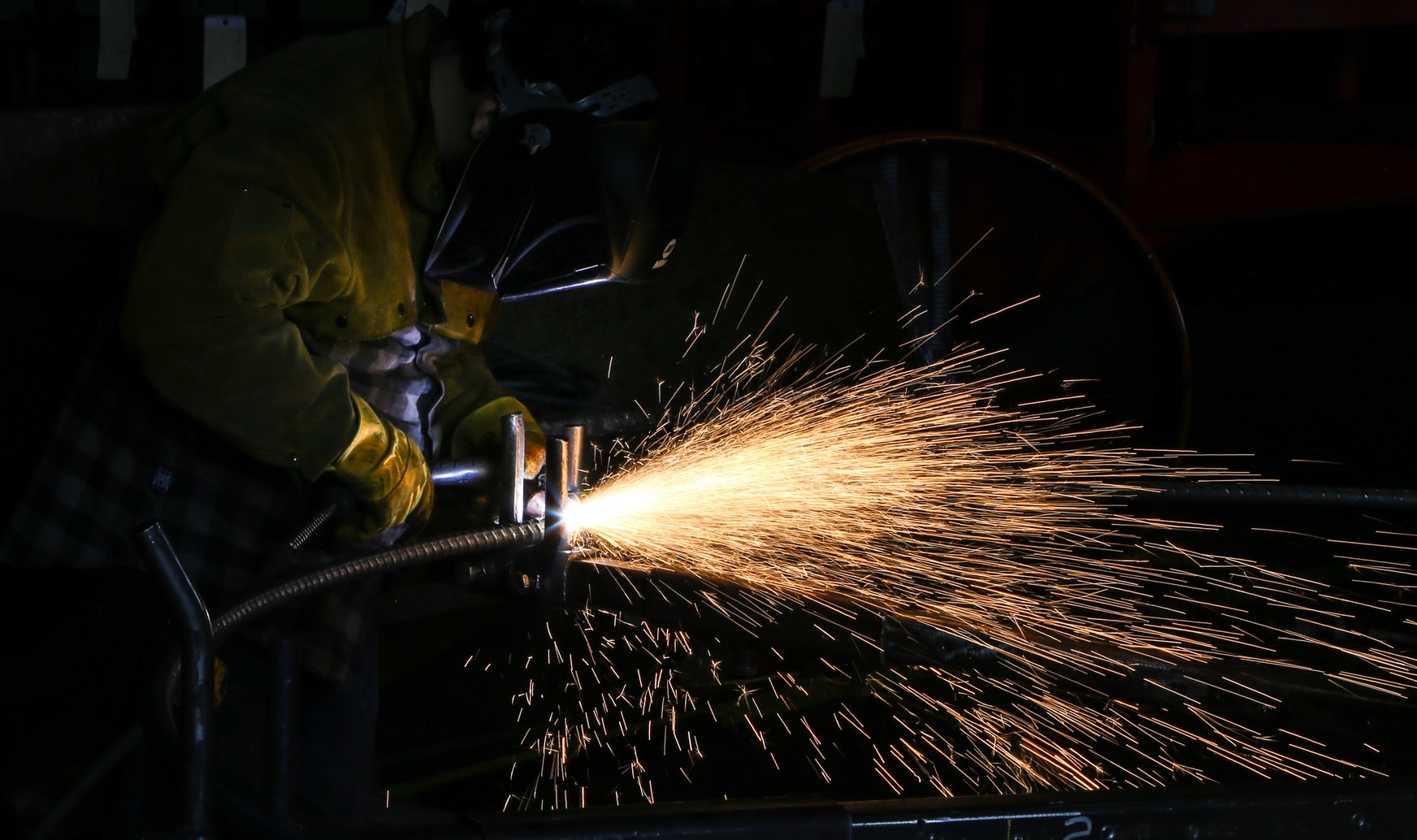
Our region is home to a vibrant manufacturing cluster that spans many industries, including defense, aerospace, shipbuilding and repair, medical devices, craft brewing, and sports and active lifestyle. With a highly-skilled workforce, robust training programs, and close proximity to Mexico, San Diego is a hub for advanced manufacturing companies, with nearly 3,150 manufacturing companies currently supporting more than 108,000 jobs.
San Diego is a craft beer capital, certainly. But add an affinity for the outdoors, San Diego’s powerhouse brewing capabilities, and a sprinkle of regional innovation, and you’re eventually bound to get hard kombucha.
Local companies JuneShine and Boochcraft, which brew their beverages from organic, fresh ingredients, are heavyweights in the $12 million international hard kombucha industry. Even Forbes agrees.
You can keep your house clean and running thanks to San Diego manufacturers that believe its users should enjoy one product for dozens of use cases.
Vista-based Dr. Bronner’s boasts 18 different uses for its castile soaps, like doing laundry, scrubbing toilets, and controlling pests. And arguably everyone’s favorite household item, Scripps Ranch-based WD-40 has compiled more than 2,000 user-documented applications, including oiling, polishing, and removing residue.
You probably know San Diego is a thriving hub for biotech in all forms – from research to medical device manufacturing. BD, Illumina, and Genentech are just a few of the local medical device companies that collectively employ more than 6,000 San Diegans.
And younger, smaller companies are showing no signs of slowing down either. From April through June 2020 alone, San Diego healthcare startups brought in $875 million in VC funding to help advance a variety of tests, treatments, and cures – largely focused on COVID-19.
When it comes to popular success, North County’s golf equipment companies are on par with the rest of our region’s manufacturers. Callaway Golf and TaylorMade Golf, both based in Carlsbad, manufacture high-quality golf and athletic equipment used by casual and pro players alike.
Headquartered in El Cajon with a factory open for public tours, Taylor Guitars equips everyone from new players to Taylor Swift with beautiful, locally-made electric and acoustic instruments. Recently, the company has seen renewed public interest in its product. In June and July alone, the company received an enormous uptick in sales – to the tune of half its projected yearly orders.
All this San Diego sun means we need healthy sun protection. Enter locally-made sunscreen. Coola, Sun Bum, and Amavara Skincare aren’t just solid sunscreen choices; they’re good for the earth too. These local manufacturers boast natural, environmentally-friendly, and cruelty free products – so you can care for yourself and the world around you.
Does your San Diego manufacturer need help finding resources, or just want to know more about San Diego’s thriving manufacturing scene? Click here to learn more, and get in touch with EDC for custom help.
The Advancing San Diego (ASD) Internship Program launched this Spring in a remote-capacity amid the COVID-19 pandemic and aims to provide up to 100 San Diego-based companies with fully subsidized interns. This program targets companies with 100 employees or less, which comprise 98 percent of all businesses in San Diego, employ nearly two thirds of San Diegans, and account for 70 percent of job growth. A key issue for these companies has been a lack of time and resources to recruit the skilled talent necessary to continue their growth.
As students close out their Summer internship experiences, EDC has rolled out this blog series to highlight the innovative local companies that make up the first cohort of the program, and the interns they hosted.
In this feature, we sat down with Anna Kelley, ASD intern at Tourmaline Wireless. A part of the inaugural cohort of host companies, Tourmaline Wireless is building the future of decentralized wireless telecommunications. The Oceanside-based company provides resilient, off-grid solutions based on mesh networks, 4G LTE, and Iridium satellite.
Tell us about yourself.
Hi my name is Anna, and I was a second-year student at San Diego Mesa College when I came across the ASD internship opportunity. I recently transferred to New York University to pursue a Computer and Electrical Engineering degree.
How has your experience in the ASD Internship Program been, and what projects/assignments have been the most meaningful?
The hands-on experience that I obtained while interning at Tourmaline Wireless exceeded all of my expectations. During this internship, I had an opportunity to get hands-on experience with different programming languages and to work on debugging and troubleshooting software defects. Since it was my first internship in the engineering field, I was worried that I was lacking in technical skills. However, my internship supervisor Paul Victorine was so supportive and he made it so easy for me to participate in all the activities during this internship. It was such an amazing learning experience for me and I will continue educating myself in these areas to grow my confidence.
How has the COVID-19 pandemic affected your day-to-day, and what challenges have you faced as a student?
The most challenging part about being a student during COVID-19 was a transition to online learning because not every class can be fully online. For example, my chemistry lab was replaced with five minutes of YouTube videos and it was not the same experience anymore.
What advice would you give to high school students looking for a successful career in the local software industry?
I would recommend participating in different clubs, programs, and getting an internship as soon as possible. This year I participated in several programs with NASA (L’Space Academy and NCAS, all remote) and it was not only fun, but also a great experience that I can put on my resume.
“It is so much darker when a light goes out than it would have been if it had never shone.”
—John Steinbeck, The Winter of our Discontent
Politics and parties aside, America lost a true icon, pioneer, barrier-breaker, and a beacon of democracy and justice this weekend. And the impacts of this loss will be felt in all corners of our country, in immeasurable ways. From young women growing up in a nation that has never recognized them as equal, to those asking that their love and relationships be acknowledged and accepted regardless of their sexual preferences, to those who have never been judged by the content of their character because of the color of their skin, to those simply seeking the basic human rights of healthcare and citizenship in a nation that has urged the world to send us its huddled masses yearning to breathe free—Justice Ruth Bader Ginsburg was a guardian, a protector and an inspiration.
In such a difficult year, in an age of such divisive politics and rhetoric, during such uncertain and uncomfortable times, she somehow remained a pillar of strength and light. Through all of it. And even when battling cancer for the fifth time, she still seemed invincible. Maybe even immortal.
May her life, legacy, and spirit continue to make us a better nation. And as citizens, may we live up to her expectations, her hopes, and her wishes in the work we do today and in the world we leave for the generations that follow.
“Fight for the things that you care about, but do it in a way that will lead others to join you.”
—Supreme Court Justice, Ruth Bader Ginsburg, 1933-2020
Every week, ‘Good News of the Week’ features a curation of positive headlines from San Diego, delivered straight to your inbox. A blend of aggregated stories from San Diego’s most trusted news sources and original EDC-created content, GNOTW provides a comprehensive recap of the region’s best stories from the past week.
For the week of September 18, 2020, here’s what we’re reading:
Every economic recovery the U.S. has experienced has increased systemic poverty & widened inequalities in Black & Latino communities. This time, we’re committed to getting the recovery right. Learn more from EDC board chair Julian Parra. Read More.
San Diego Science & the Global Pandemic
In August, EDC’s San Diego: Life. Changing. wrapped up a series of virtual events highlighting the innovation economy and spirit of collaboration that exist in San Diego. If you weren’t able to tune in, you can catch the recap on our blog.Read More.
San Diego business resources:
Amidst everything happening in the world, we need a reminder that there’s plenty of ‘Good News’ to go around in San Diego. We have also compiled additional resources for businesses and individuals seeking additional guidance.
Each month the California Employment Development Department (EDD) releases employment data for the prior month. This edition of San Diego’s Economic Pulse covers August 2020 and reflects some effects of the coronavirus pandemic on the labor market. Check out EDC’s research bureau for more data and stats about San Diego’s economy.
Key Takeaways
Unemployment drops sharply to 9.9 percent; remains highest in the unincorporated parts of the County.
Employment up in nearly all industries, up 20,500 jobs month over month.
Low-wage job losses are nearly 30 times greater than high-wage job losses.
Unemployment Drops
The region’s unemployment rate was 9.9 percent in August down from a revised 12.4 percent in July 2020, and far above the year-ago estimate of 3.4 percent. Unemployment declined monthly as the region continues to reopen and jobs recover. San Diego’s unemployment rate remains lower than the state unemployment rate of 11.6 percent, but higher than the national unemployment rate of 8.5 percent.
Unemployment was highest in the unincorporated areas of Bostonia (17.9%), Bonita (14.7%), Spring Valley (13.6%), and in the cities of National City (13.7%) and El Cajon (13.6%), and lowest in the cities of Solana Beach (5.5%), Poway (6.8%), Coronado (6.8%), Del Mar (7.3%), and Encinitas (7.3%). Wealthier areas are enjoying lower rates of unemployment, while neighborhoods with a larger share of lower-paid workers suffer from higher rates of unemployment – elaborated on below.
Employment Bounces Back
Total nonfarm employment increased in August, up 20,500 jobs. This follows similar patterns to the state and national data. In California, nonfarm employment increased by 140,400 in August from the month prior, while payroll employment increased by 1.4 million in the U.S. during the same time period.
However, compared to a year ago, San Diego nonfarm employment remains down 135,800 jobs or 9 percent. In California, total nonfarm employment is down 1.6 million jobs, or 8 percent compared to a year ago, while the U.S. is down nearly 13 million jobs, or 8.8 percent.
Sector Employment Gradually Returning
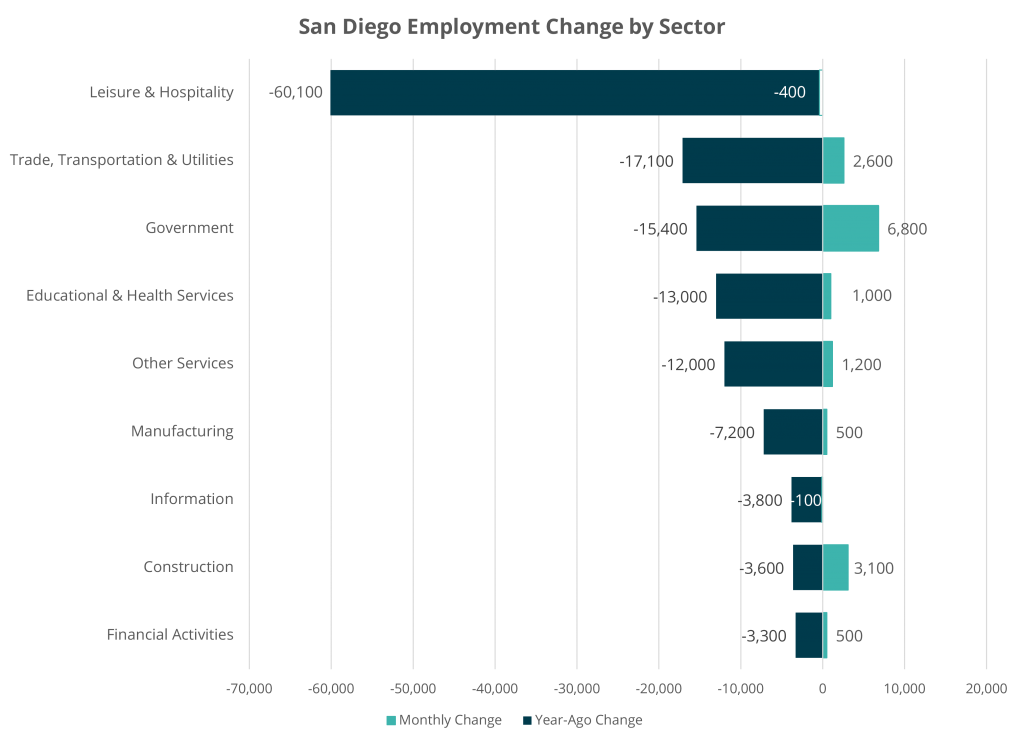
Government accounted for the largest monthly gains, adding 6,800 jobs in August, primarily concentrated in local government education (up 4,300 jobs) after last month’s large decline. Compared to a year ago, local government education is still down 11,400 jobs.
Professional and business services followed with an increase of 5,300 jobs. Most of those job gains were in the administration and support services sector, which added 3,100 jobs to the region.
Construction employment increased this month, adding 3,100 jobs.
Trade, transportation, and utilities employment increased this month, adding 2,600 jobs. This was driven primarily by retail, which added 2,300 jobs.
Leisure and hospitality employment as a whole declined by 400 jobs in August. Encouragingly, however, restaurants added 700 jobs last month amid measured reopenings across the region.
Recovery Must Focus on Low-Wage Workers
Despite the gains observed in August, industry employment remains well below levels a year ago. The largest decline in employment has been in leisure and hospitality, which is down 60,100 jobs (shown in the chart above), or 29 percent since August 2019. Most of those leisure and hospitality job losses are concentrated in accommodation and food services, with a loss of 43,900 jobs. Trade, transportation, and utilities are down 17,100 jobs, with 11,700 of those jobs in retail. Government is down 15,400 jobs annually, with 14,000 local government jobs lost.
The lowest wages in San Diego County are concentrated in the sectors hardest hit by COVID-19: accommodation and food services, retail trade, arts, entertainment, and recreation, and educational services. Average wages for accommodation and food services are $30,560, retail trade are $41,785, arts, entertainment, and recreation are $45,040, and educational services are $49,826. Each sector hit hardest by COVID19 falls below the median regional wage of $73,596.
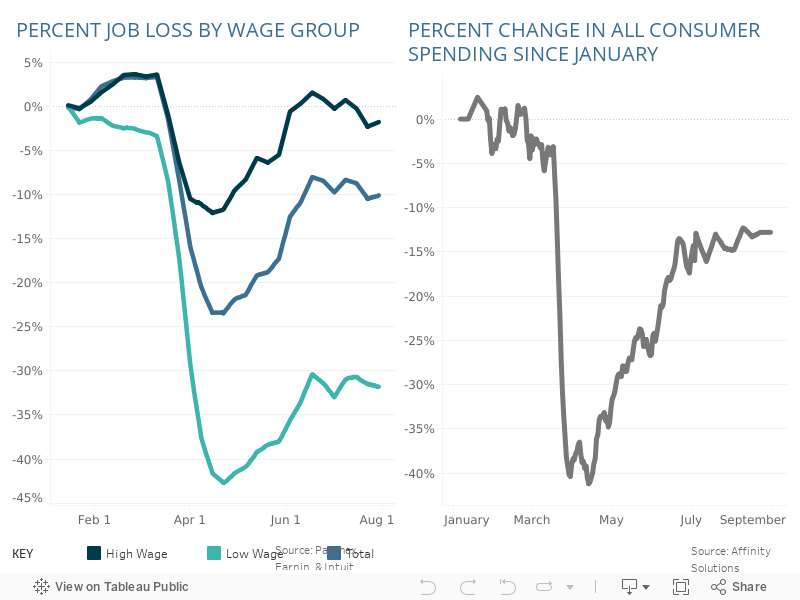
Layoffs in low-wage sectors have occurred at a rate much higher than those in high-wage sectors. According to Opportunity Insights, low wage jobs are down 31.8 percent. Meanwhile, high wage jobs are down only 1.8 percent.
Consumer spending has also suffered as wages continue to drop, especially for lower-wage employees. While low-wage workers hold less spending power, they spend more of their paychecks directly, rather than investments or savings. We can expect to see a larger proportion of spending come back into the economy as lower-paid employees get their jobs back, and ultimately advance to better paying positions over time.
Every previous economic recovery has increased systemic poverty and widened inequality. Too often in a rush to restore normalcy, entire segments of our community have been left further behind. The stakes could not be higher that we get this recovery right. We must rebuild an economy that is more resilient than before, so prosperity reaches more people. Read more about EDC’s recovery framework.
EDC is here to help. You can use the button below to request our assistance with finding information, applying to relief programs, and more.